
ACS Verification Binders: Digital vs. Physical — Which One Deserves the Trauma Crown?
If you’ve ever prepared for an ACS (American College of Surgeons) verification visit, you already know the emotional journey: a caffeine‑fueled odyssey filled with tabs, hyperlinks, frantic file‑hunting, and the occasional existential crisis. Among the many decisions trauma programs face, one question divides coordinators faster than an unexpected tracer question:
Should your ACS Verification Binder be digital or physical?
Let’s explore both options—witty but responsibly, and yes, with proper APA citations—so you can choose the format that best supports your center’s quest for shiny ACS verification status.
The Case for the Digital Binder: Sleek, Searchable, and Site‑Visit‑Friendly
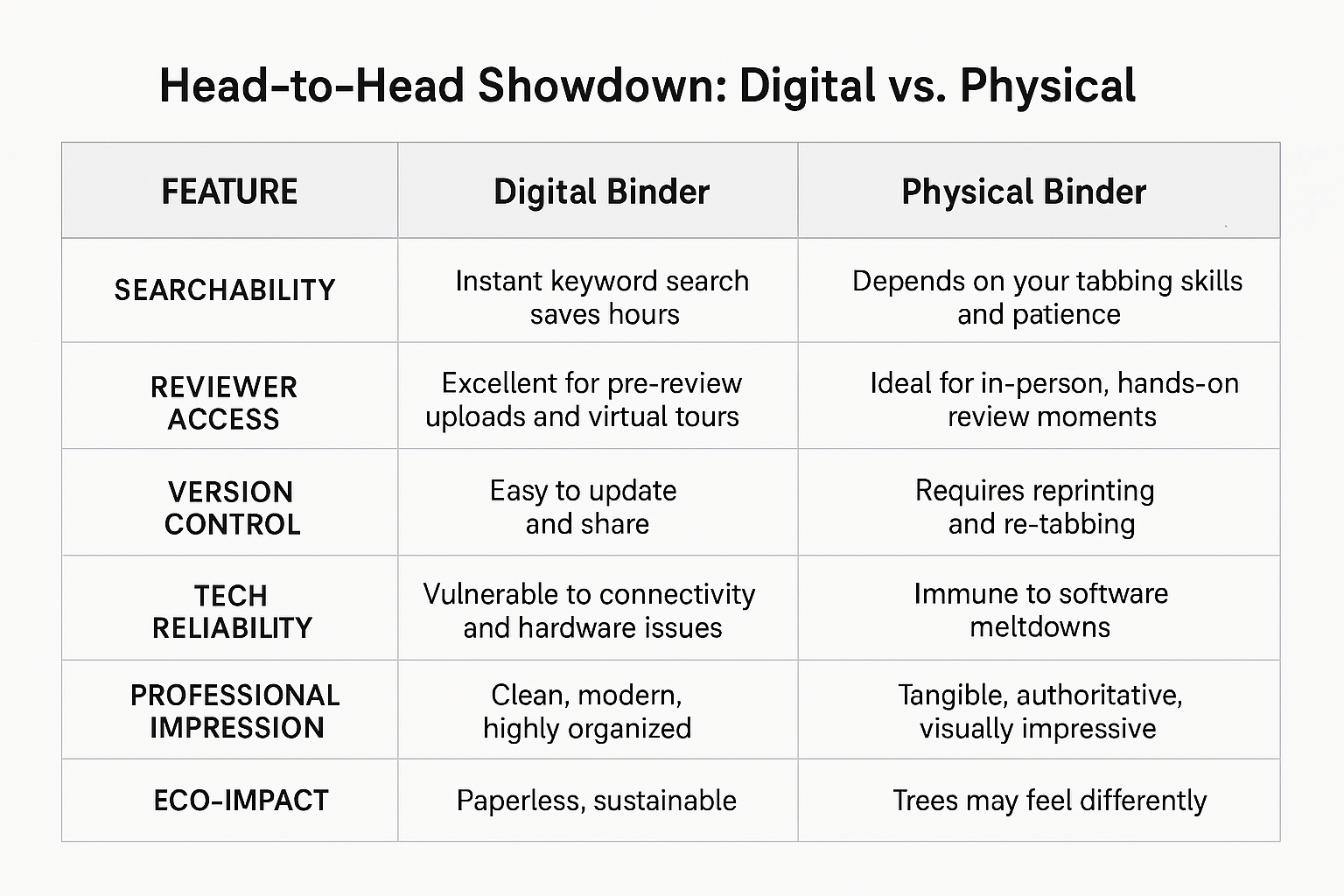
Digital binders have become the trauma world’s version of the smartphone: once you try it, you wonder how you ever lived without it. With the ACS’s modernized verification process and increasing reliance on electronic documentation, a digital binder often aligns naturally with how trauma programs function today.
Virtual site visits, pre‑review uploads, and electronic chart reviews have become standard components of ACS verification workflows (American College of Surgeons, n.d.). Digital documentation also supports the ACS’s structured pre‑review processes, such as providing program documents, charts, and PI evidence in organized electronic formats well ahead of the onsite evaluation (Walsh, 2024).
Beyond convenience, digital binders reduce the risk of mismatched tabs, missing documents, and that dreaded “version 6_FINAL_revised_v2.” When reviewers expect to access materials quickly—especially with evolving ACS standards and clarifications—a digital system ensures fast retrieval and clean, consistent formatting (Fojut, 2025).
And let’s be honest: scrolling is kinder to your wrists than flipping 600 pages under pressure.
The Case for the Physical Binder: Tactile, Tangible, and Time‑Tested
Despite the digital revolution, physical binders still hold nostalgic charm and surprising utility. They offer a sense of control—like a well‑indexed security blanket for site‑visit day. ACS reviewers remain accustomed to examining physical materials during on‑site verification visits, and many trauma programs view a physical binder as both a working reference and a symbolic testament to preparation (American College of Surgeons, n.d.).
Physical binders also shine when technology falters. Wi‑Fi down? Laptop rebooting? Reviewer unfamiliar with your SharePoint? No problem. Flip to the tabbed section, point confidently, and let the binder do the talking.
Additionally, in high‑volume programs juggling extensive PI, registry, staffing, and compliance evidence—as outlined in ACS guidelines and staffing requirements—having a physical compilation can help teams visualize the scope of their readiness (Q‑Centrix, 2025; ImageTrend, 2024).
Plus, no one has ever said, “Sorry, my binder needs a software update.”
Head‑to‑Head Showdown: Digital vs. Physical
The Smartest Choice? Both.
In truth, dual‑format is the trauma world’s power move.
A digital binder ensures compliance with electronic submission requirements and supports ACS expectations around modern documentation practices (American College of Surgeons, n.d.). Meanwhile, a physical binder acts as your site‑visit backup plan and gives your team a tactile anchor during high‑stress moments.
In a world where ACS standards continue to evolve—most recently through updated clarifications in 2025 (Fojut, 2025)—a hybrid approach keeps your program resilient, reviewer‑ready, and adaptable.
Conclusion: Organize Like Lives Depend on It—Because They Do
The ACS verification process is designed to elevate trauma care quality, improve outcomes, and spotlight excellence (Radeker, n.d.). Whether your binder is digital, physical, or both, the real goal is creating a system that supports accuracy, consistency, and confidence across your team.
And remember: ACS reviewers don’t reward binder style…
But they absolutely notice binder chaos.
Call to Action
If your trauma program is gearing up for ACS verification—or if you’re rethinking your binder strategy—now is the perfect moment to act. Audit your current documentation workflow, choose (or blend) formats strategically, and empower your team with tools that reduce stress, streamline compliance, and reflect your commitment to top‑tier trauma care.
Ready to build a binder that truly saves time—and maybe your sanity? Let’s get started.
References
American College of Surgeons. (n.d.). Trauma verification, review, and consultation program. https://www.facs.org/quality-programs/trauma/quality/verification-review-and-consultation-program/
Fojut, R. (2025). ACS clarifies requirements in 10 trauma center standards. Trauma System News. https://trauma-news.com/2025/09/acs-clarifies-requirements-in-10-trauma-center-standards/
ImageTrend. (2024). 3 misunderstood ACS grey book standards for compliance. https://www.imagetrend.com/blog/misunderstood-acs-grey-book-standards/
Q‑Centrix. (2025). Meeting the ACS trauma registry staffing requirements. https://www.q-centrix.com/lp/meeting-the-acs-trauma-registry-staffing-requirements/
Radeker, T. (n.d.). 10 key factors to guide your ACS trauma center verification decision. Optimal Healthcare Advisors. https://oha-llc.com/10-key-factors-to-guide-your-acs-trauma-center-verification-decision/
Walsh, C. (2024). Level II verification experience [Slide Presentation] .Mercy Medical Center Redding. https://www.traumamanagersca.org/_docs/Level_II_Verification_Experience.pdf
