
Mock Review Strategies for ACS Trauma Verification
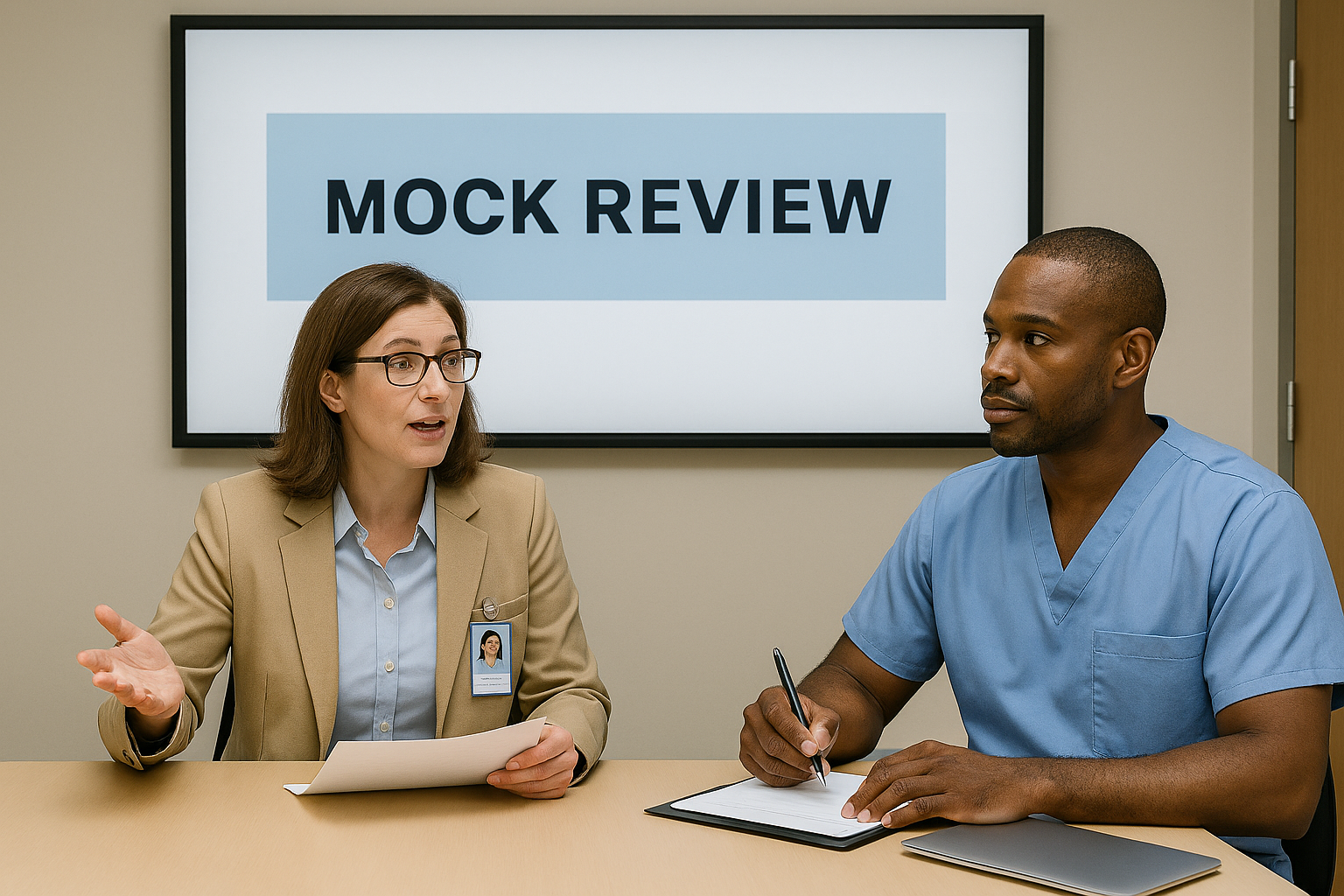
Preparing for an American College of Surgeons (ACS) Trauma Verification can feel a bit like preparing for company when your in‑laws are known for running a white‑glove test along your windowsills. Fortunately, mock reviews—your trauma center’s rehearsal dinner—help ensure you shine when the real surveyors arrive. By intentionally simulating the Verification, Review, and Consultation (VRC) process, trauma programs can refine workflows, correct deficiencies, and highlight the strengths that make them exceptional. Think of it as your dress rehearsal, but with fewer sequins and more data validation.
Why Mock Reviews Matter
The ACS VRC program provides an objective assessment of a trauma center’s resources, processes, and performance improvement ecosystem (American College of Surgeons, n.d.). Given the rigor of the 2022 ACS standards—which outline expectations across governance, clinical care, PIPS, research, outreach, and more—mock reviews act as both mirror and microscope. They reveal what’s working beautifully and what needs the administrative equivalent of a protein shake.
Recent data highlight why preparation matters: under the 2022 standards, 44% of trauma centers receive only a one‑year verification with a required Corrective Action review, and 7% are not verified at all (Critical Partners, n.d.). A comprehensive mock review helps keep your center on the right side of that statistic.
Core Strategies for Effective Mock Reviews
1. Start With the Standards (and Actually Read Them)
Begin by grounding your team in the current Resources for Optimal Care of the Injured Patient (2022 Standards)—the ACS trauma bible (American College of Surgeons, 2025). Review the Pre‑Review Questionnaire (PRQ) early, as it drives much of the site visit conversation. Treat the PRQ not as homework, but as a chance to show your program’s sophistication and integrity.
2. Mine Your Past Like It’s Gold
If this isn’t your first rodeo, review your previous verification report. Past deficiencies have a way of resurfacing like that one email you meant to send but didn’t (Radeker, 2024). A mock review allows you to demonstrate documented loop closure—critical in the PIPS domain.
3. Conduct a Full‑Scale Dress Rehearsal
A true mock survey mirrors the actual ACS agenda: leadership interviews, chart reviews, facility tours, PIPS deep dives, and perhaps the occasional nervous coffee refill. Including multidisciplinary participants ensures a 360‑degree assessment (Radeker, 2024). External reviewers—ideally ACS‑experienced—add valuable objectivity and “fresh eyes,” catching issues insiders may overlook.
4. Prioritize Documentation That Speaks for Itself
Policies, clinical practice guidelines, trauma activation criteria, PI meeting minutes, and data reports should form a coherent narrative. If your documentation reads like a choose‑your‑own‑adventure novel, reviewers will struggle to follow the logic. A mock survey serves as a pressure test for whether your materials clearly support compliance.
5. Strengthen the PIPS Storyline
Performance Improvement and Patient Safety (PIPS) remains the backbone of ACS verification. Your mock review should stress‑test your PI loop closure processes, case review pathways, Sentinel and Tiered review structures, and the all‑important “show your work” evidence trail (American College of Surgeons, 2025).
6. Showcase Injury Prevention and Outreach Like They’re Your Program's Personality
Injury prevention often becomes the overlooked middle child of trauma verification. A mock survey helps ensure your program's outreach, education, and data‑driven prevention efforts shine. Verify alignment between your injury prevention specialist’s work and your trauma registry’s epidemiology.
7. Debrief Like You Mean It
After your mock review, hold a structured debrief with clear action items, timelines, and accountability. Prioritize findings based on verification impact and resource availability. The time between mock and actual review should be a period of polishing, not panic.
Conclusion
Mock reviews are not merely practice—they are strategic opportunities to strengthen your trauma center’s operational excellence and highlight its commitment to optimal patient care. By embracing the process with humor, humility, and meticulous preparation, your team can enter ACS Trauma Verification day with confidence (and perhaps even enjoy it a little). Think of mock reviews as your chance to rehearse perfection—because trauma care deserves nothing less.
Now is the perfect moment to move your trauma program from “almost ready” to “ACS‑level unstoppable.” Gather your team, schedule your mock review, and commit to refining every process that elevates patient care. Don’t wait for the official site visit to discover opportunities for improvement—create your own momentum now. Engage your stakeholders, scrutinize your systems, and celebrate the strengths that make your trauma center exceptional.
Your next verification is more than a milestone—it’s a testament to the lives you protect every day. Start preparing today, lead with purpose, and let your readiness speak for itself.
References
American College of Surgeons. (n.d.). Trauma Verification, Review, and Consultation Program. https://www.facs.org/quality-programs/trauma/quality/verification-review-and-consultation-program/
American College of Surgeons. (2025). Resources for Optimal Care of the Injured Patient: 2022 Standards. https://www.facs.org/quality-programs/trauma/quality/verification-review-and-consultation-program/standards/
Critical Partners. (n.d.). ACS Trauma Verification Preparation. https://criticalpartners.com/trauma
Radeker, T. (2024). Gearing up for success: A trauma program manager’s guide to mastering their first trauma survey. https://www.linkedin.com/pulse/gearing-up-success-new-trauma-program-managers-guide-radeker-ilg2f
