
Room Setup Tips for Review Day: Creating a Space That Says “We’re Ready”
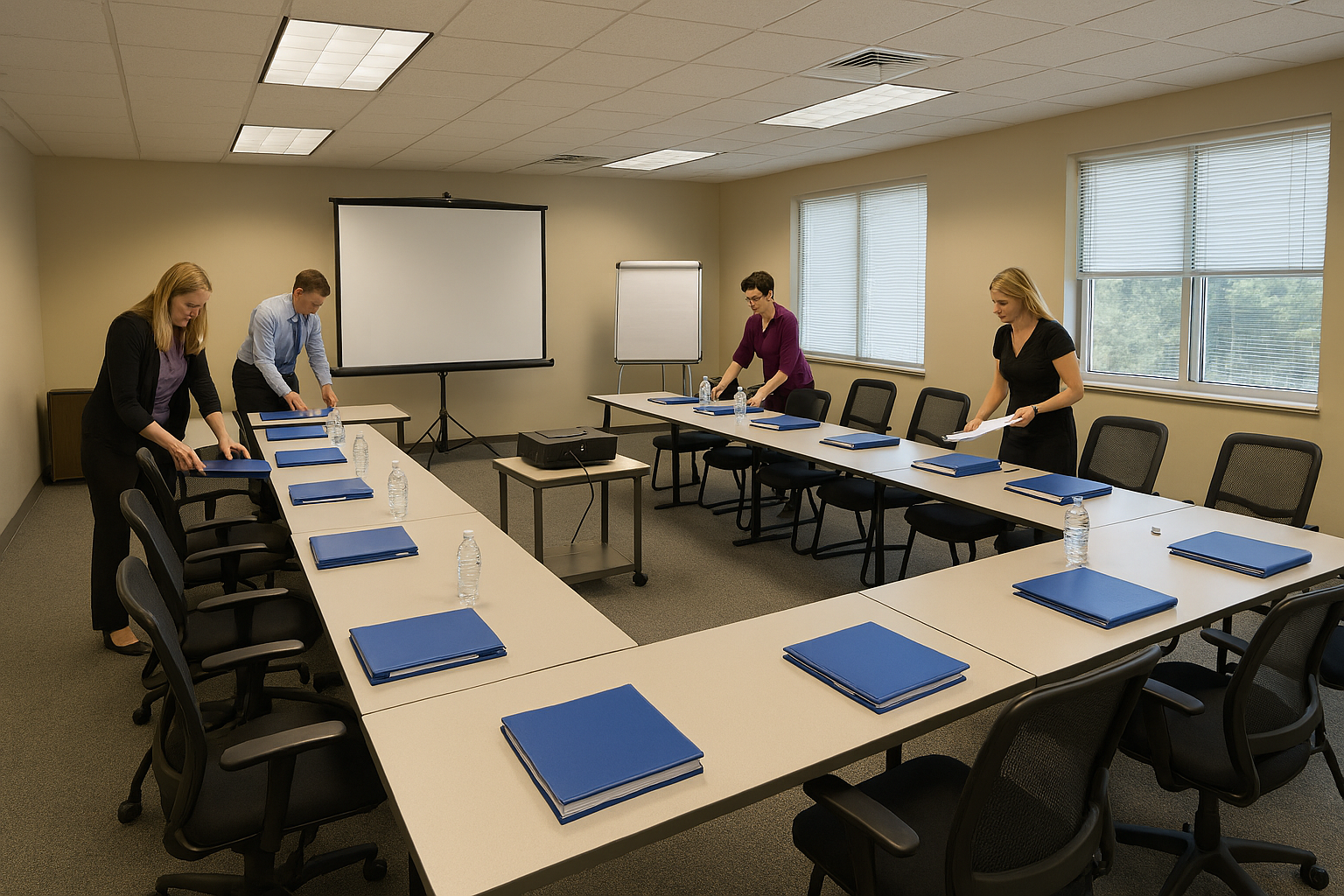
Preparing for an ACS Trauma Verification, Review, and Consultation (VRC) site visit is a little like preparing for company—except the company is a team of highly experienced reviewers, and instead of judging your housekeeping, they’re assessing the performance, quality, and systems that support trauma care. Still, the room setup matters more than people like to admit. A well‑designed review space telegraphs organization, confidence, and readiness.
According to the ACS, the VRC process evaluates a trauma program’s commitment, resources, policies, performance improvement, and systems through structured agenda‑driven onsite review activities (American College of Surgeons, n.d.-a). Because reviewers spend long stretches in the review room—conducting chart audits, evaluating PIPS processes, and holding team meetings—a well‑organized, well‑equipped, and comfortable room becomes your silent partner in verification success.
Below are tips to help you turn your review space into your trauma center’s best advocate.
1. Select a Room That Means Business (But Not “Bunker”)
Choose a room large enough to comfortably house the reviewer team, your Trauma Program Manager (TPM), and any scheduled stakeholders. Because the ACS agenda includes prolonged sessions of chart review, meetings, and documentation evaluation over one or two days (American College of Surgeons, n.d.-b), comfort is not a luxury—it’s strategy.
Pro Tip: Pick a room with natural light if possible. Reviewers are humans, not cave‑dwelling troglodytes.
2. Make Seating a Science, Not an Afterthought
Arrange seating to give reviewers direct lines of sight to monitors, documents, and each other. Remember: They will be reviewing charts for hours (American College of Surgeons, n.d.-b), so ergonomic chairs are worth the investment.
Avoid: Folding chairs that squeak like distressed seagulls every time someone shifts their weight.
3. Tech Readiness: Channel Your Inner IT Hero
Ensure that all required devices—laptops, dual monitors, projectors, and secure drives—are set up, logged in, tested, and functioning before the reviewers arrive. Delays due to login issues or incompatible connectors can add unnecessary stress. Because chart audit and document review are integral parts of Day 1 activities (American College of Surgeons, n.d.-b), a glitch‑free tech setup is essential for keeping the review timeline on track.
And here’s a pro move:
Have an on‑site IT specialist available during setup and throughout the visit. Their ability to troubleshoot Wi‑Fi quirks, VPN tantrums, printer rebellions, or monitor‑display identity crises in real time can make the entire process smoother and faster. In a process where efficiency matters, an IT expert becomes your behind‑the‑scenes MVP.
4. Document Organization: Think “Library,” Not “Treasure Hunt”
Prepare the following materials neatly and logically:
Printed agenda
Facility maps
Staff rosters
PI Committee minutes
Required medical records
Injury prevention/education materials
Policies, guidelines, and protocols referenced in the PRQ
Since the ACS requires trauma centers to provide medical records and organizational documentation at the time of the onsite visit (American College of Surgeons, n.d.-b), having everything pre‑sorted by category—and preferably tabbed—will demonstrate that your team respects both the reviewers’ time and the process.
Even better:
Create a folder system where each category has its own separate, clearly labeled folder. This not only keeps everything tidy but also allows you to quickly retrieve items if questions arise. When an issue pops up mid‑review, the last thing you want is a frantic shuffle through a stack of papers that looks like a filing cabinet exploded.
5. Snacks and Hydration: Fuel the Mission
Review day is long. Very long. While your reviewers aren’t expecting a catered spa retreat, accessible water, coffee, and simple snacks are always appreciated. You want your review team focused on your trauma program—not fantasizing about lunch.
Just remember: Keep it professional. This is not the place for a nacho cheese fountain.
6. Whiteboards and Visual Aids: Your Silent Communicators
Keep a whiteboard available for process mapping discussions, PIPS loop‑closure illustrations, or ad‑hoc clarifications. Visual tools help reviewers better understand system flow and allow you to demonstrate alignment with ACS PIPS and program‑governance expectations described in the VRC resources (American College of Surgeons, n.d.-a).
Also consider creating a concise PowerPoint presentation summarizing your top Performance Improvement (PI) projects and your injury prevention and outreach initiatives. This presentation should highlight:
The data that led your team to select these focus areas
What actions were taken and why
Measurable outcomes—improvements, compliance changes, loop closures
Your future direction, including next steps, goals, and sustainability plans
This structured visual overview not only reinforces transparency but also clearly showcases your program’s evolution, responsiveness, and commitment to continuous improvement.
7. Eliminate Distractions: Your Space Should Whisper “Professionalism”
Silence nonessential notifications, remove clutter, and control room traffic. The room for review should feel intentional—because it is.
Avoid placing the review near construction zones, break rooms, or hallways where staff loudly debate the best flavors of energy drinks.
8. Plan the Flow of People Like a Stage Director
Coordinate when various team members will enter and exit the room—TMD, TPM, PI leaders, subspecialists—based on the scheduled activities. The ACS site visit agenda is predictably structured (American College of Surgeons, n.d.-b), so use that structure to choreograph a smooth, interruption‑free experience.
9. Stress Less: Clean, Simple, and Functional Wins Every Time
While excellence is the goal, perfection is not the requirement. Reviewers are looking for transparency, organization, and readiness—not marble countertops or scented candles. A crisp and functional space shows that your trauma center is serious about quality and capable of thoughtful preparation.
Conclusion: Your Room Should Tell the Reviewers What You Already Know
A well-prepared room supports a well-prepared trauma program. It shows that you understand the VRC process, respect the reviewers’ time, and are ready to highlight the hard work your team does every day to care for trauma patients.
Ready to elevate your next ACS review experience? Start by transforming your review room into a space that reflects your trauma center’s excellence. Gather your team, prep your space, and let your room help tell your story!
References
American College of Surgeons. (n.d.-a). Trauma Verification, Review, and Consultation Program. https://www.facs.org/quality-programs/trauma/quality/verification-review-and-consultation-program/
American College of Surgeons. (n.d.-b). The verification, review, and consultation process. https://www.facs.org/quality-programs/trauma/quality/verification-review-and-consultation-program/process/
