
Clearing the Air: Understanding Airway and Respiratory Therapy Roles in Activated Trauma Resuscitations
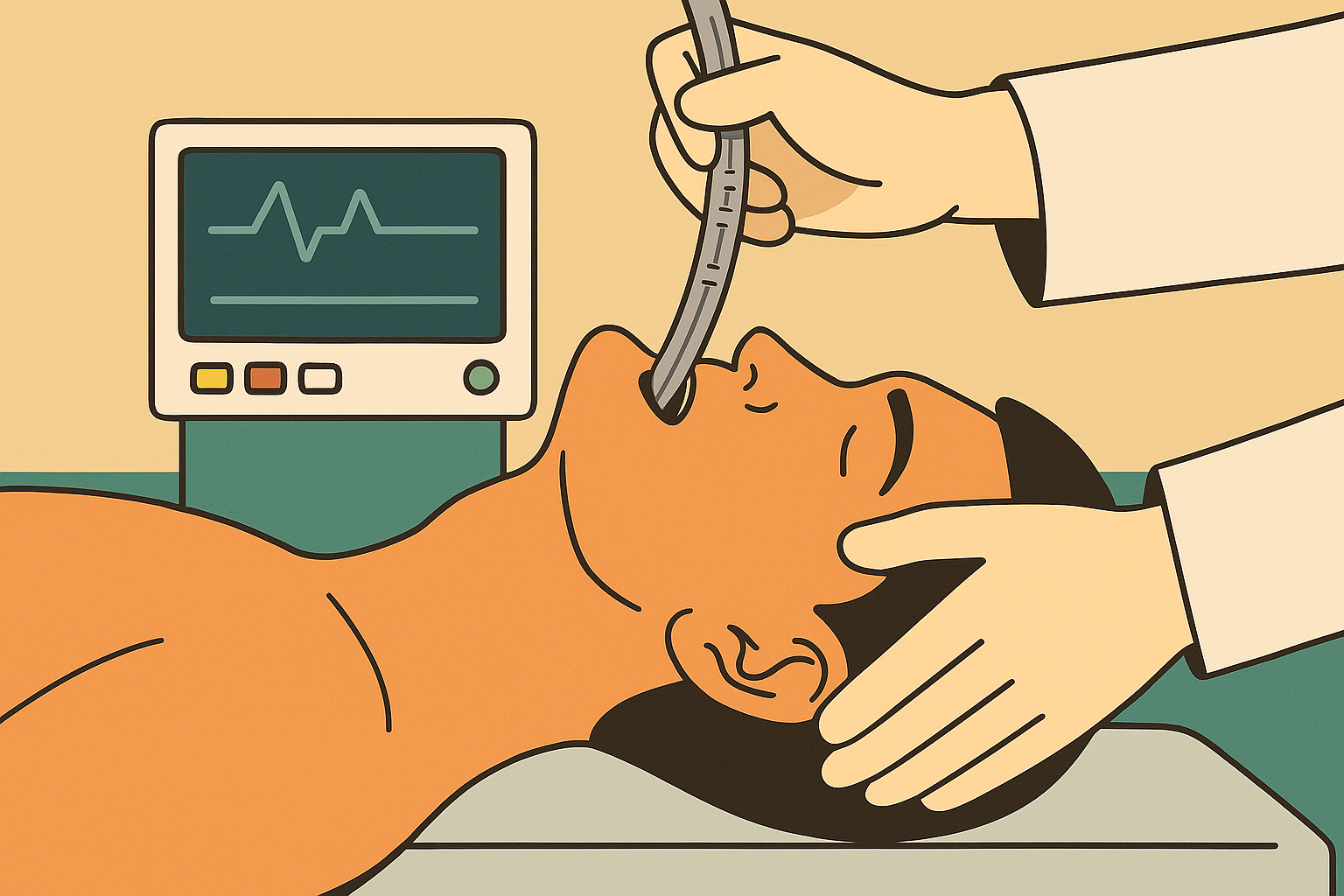
When a trauma activation kicks off, the resuscitation bay transforms into a high‑stakes symphony of organized chaos. Monitors beep, pagers buzz, and everyone’s adrenaline peaks faster than a lactate level in hemorrhagic shock. Amid this controlled frenzy, one truth remains universal: airway is king, and clarity around who manages it is essential for both patient outcomes and team harmony.
Airway and respiratory therapy (RT) roles, though sometimes blurred in the heat of the moment, are fundamental pillars of trauma care. Establishing clear expectations helps prevent task overlap, reduces errors, and ensures the patient receives the kind of oxygenation even SpO₂ monitors would applaud.
Airway Management: The First Movement in the Trauma Orchestra
In major trauma, airway threats are common, life‑limiting, and time‑sensitive. Evidence‑based trauma airway guidelines emphasize structured, team‑based approaches ensuring rapid assessment, cervical spine protection, and coordinated interventions from prehospital arrival through definitive airway placement (Brown et al., 2020). Clear role delineation becomes even more important given the complexity of physiologically difficult airways, where anatomical distortion, edema, bleeding, and agitation may complicate intubation (Dave, Romito, & Karamchandan, 2024).
The Airway Clinician: Who Holds the Laryngoscope?
Trauma guidelines consistently assign definitive airway decision‑making to experienced clinicians such as emergency physicians or anesthesiologists. For instance, the UAB Trauma Airway Management Guideline specifies responsibilities for airway physicians, including head and neck evaluation, cervical spine stabilization, and performing intubation when required (von Schweinitz et al., 2024).
But even the most seasoned airway doctor knows that efficient airway care is never a solo sport.
Respiratory Therapists: The Unsung Heroes of the Trauma Bay
If airway physicians are the conductors, respiratory therapists are the first‑chair musicians whose skill ensures the performance doesn’t fall flat.
RTs play essential roles in trauma resuscitation, including:
Ensuring airway equipment readiness and functionality, a deceptively simple task with lifesaving impact (von Schweinitz et al., 2024).
Assisting with cervical spine protection, particularly during log rolls or airway manipulation, demonstrating that RT expertise extends far beyond ventilator knobs (von Schweinitz et al., 2024).
Managing oxygen delivery and ventilator settings, critical for preventing peri‑intubation desaturation and post‑intubation complications noted in national EMS quality initiatives (National EMS Quality Alliance, 2024).
Supporting integrated respiratory care, a function widely recognized in critical care and pulmonary medicine, where RTs improve outcomes across multiple respiratory modalities (Climan, 2024). [pulmonolog...dvisor.com]
In many trauma systems, RTs are explicitly identified as core trauma team members, standing shoulder‑to‑shoulder with surgical residents, anesthesia teams, and primary nurses (Cincinnati Children’s Trauma Guidelines, 2024). This formal recognition reinforces the importance of role clarity to streamline communication and ensure patient safety. [trauma.pem...innati.com]
Why Role Clarity Matters: Avoiding the “Too Many Hands on the Bag” Problem
Ambiguity in acute trauma care can be as dangerous as unrecognized airway obstruction. When teams lack clarity, critical steps may be duplicated—or worse, missed entirely. With airway management already fraught with potential complications such as aspiration, hypoxia, cervical instability, and difficult laryngoscopy (Reddy & Yavagal, 2024), having the right person performing the right task at the right time becomes non‑negotiable. [ijirt.org]
Even outside the trauma bay, airway management research stresses structured algorithms, task assignment, and pre‑planned equipment preparation as essential strategies for improved first‑pass success rates and reduced adverse events (ITLS, 2019).
Conclusion: A Well‑Orchestrated Airway Saves Lives
Trauma care may be unpredictable, but roles within trauma airway management don’t have to be. With clear delineation of responsibilities between airway clinicians and respiratory therapists, teams can create a predictable rhythm in an otherwise turbulent environment.
When every team member knows their notes, trauma resuscitation becomes a coordinated performance—one where the patient always deserves a standing ovation.
References
Brown, C. V. R., Inaba, K., Shatz, D. V., et al. (2020). Western Trauma Association critical decisions in trauma: Airway management in adult trauma patients. Trauma Surgery & Acute Care Open, 5(1), e000539. https://doi.org/10.1136/tsaco-2020-000539.
Climan, A. (2024). ATS pulmonary rehabilitation guidelines: RT is essential but underused. Pulmonology Advisor. https://www.pulmonologyadvisor.com/features/pulmonary-rehab-respiratory-therapists-improve-patient-care/
Cincinnati Children’s Hospital Medical Center. (2024). Trauma team roles and responsibilities (TR‑01). https://trauma.pemcincinnati.com/wp-content/uploads/2024/08/TR01-Trauma-roles-2024-FINAL.pdf
Dave, S., Romito, B., & Karamchandani, K. (2024). Management of the traumatized airway. Current Anesthesiology Reports, 14, 503-511. https://doi.org/10.1007/s40140-024-00650-z
International Trauma Life Support (ITLS). (2019). Airway algorithm for trauma. https://www.itrauma.org/wp-content/uploads/2019/09/Current-Thinking-Airway-Algorithm-for-Trauma-FINAL-Sept-2019.pdf
National EMS Quality Alliance. (2024). NEMSQA Measures Report: Airway Management. https://www.nemsqa.org/assets/Airway/2024%20NEMSQA%20Measures%20Report%20Airway%20Management.pdf
Reddy, P. S., & Yavagal, C. M. (2024). Assessing critical care challenges in respiratory support for trauma patients with airway compromise. International Journal of Innovative Research in Technology. https://ijirt.org/publishedpaper/IJIRT170019_PAPER.pdf
von Schweinitz, B., Hudson, K., Venter, A., et al. (2024). UAB trauma airway management clinical practice guideline. https://www.uab.edu/medicine/surgery/images/Trauma_and_Acute_Care_Surgery/UAB_Trauma_Airway_Management.pdf
