
Understanding Shock in Trauma: A Conceptual Guide
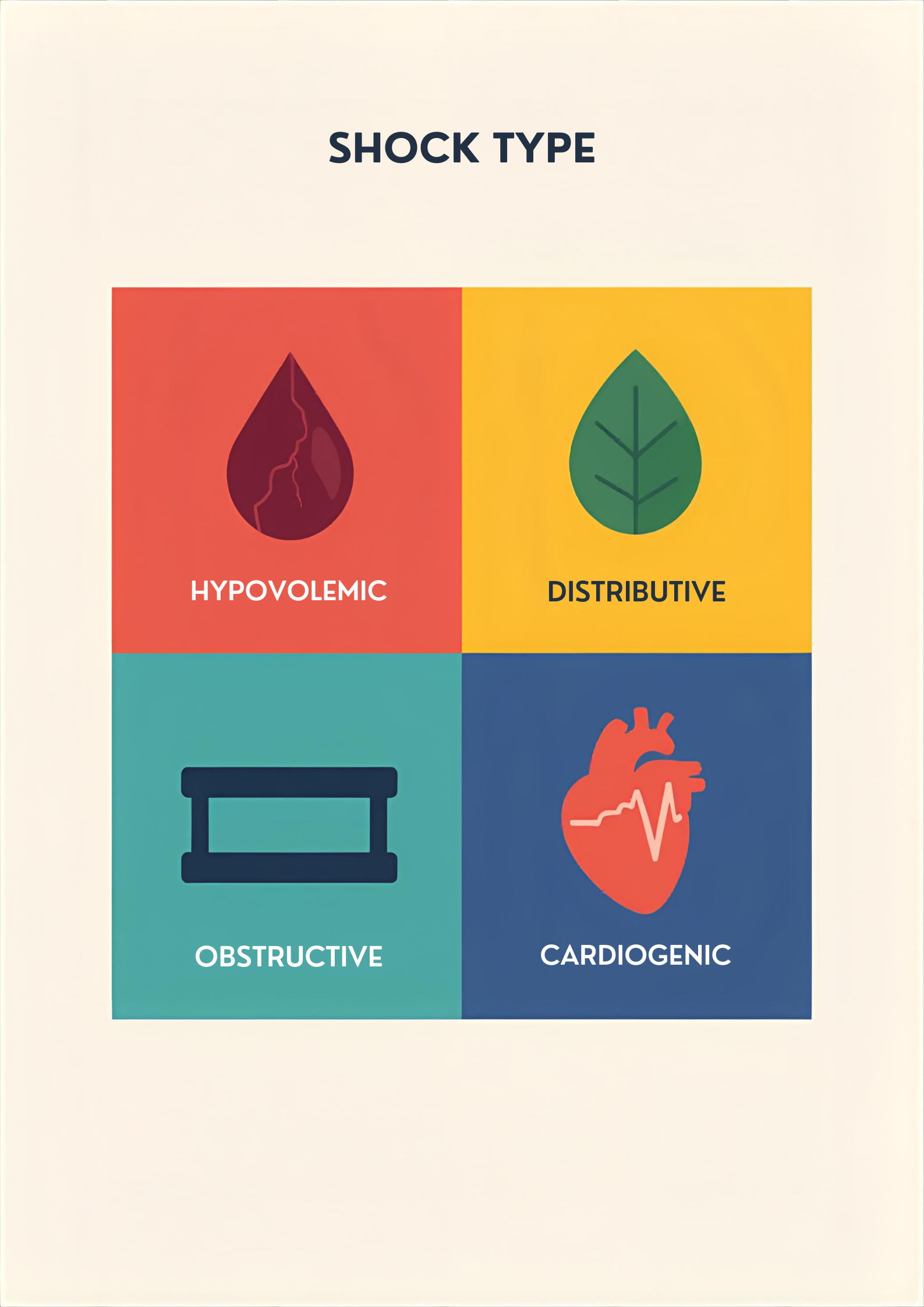
Shock in trauma is like an uninvited guest at a party: it arrives abruptly, causes chaos, and if you don’t intervene quickly, everyone is going to have a very bad time. In clinical terms, shock represents a state of inadequate tissue perfusion leading to cellular dysfunction, organ failure, and—if untreated—death (American College of Surgeons [ACS], 2024). While the physiology can get dense, categorizing shock into conceptual buckets helps clinicians recognize what they’re dealing with and act fast. Below is a walk‑through of trauma‑relevant shock types that blends science, systems thinking, and just enough wit to keep you awake.
Hypovolemic Shock: The Classic Trouble‑Maker
Hypovolemic shock is the one we all think of first—the “bread‑and‑butter” shock of trauma care. It’s driven by a loss of circulating blood or fluids, most commonly from hemorrhage (ACS, 2024). Imagine the circulatory system as a highway and red blood cells as cars; hypovolemia represents a traffic jam because half the cars fell off a cliff.
Clinically, the body compensates with tachycardia, vasoconstriction, and a desperate attempt to maintain perfusion pressure (Guyton & Hall, 2021). But compensatory mechanisms only last so long. Untreated hemorrhage progresses quickly toward metabolic acidosis, coagulopathy, and death—a trilogy no trauma team wants to see (ACS, 2024).
Key concept: Fix the volume. Stop the bleed. Don’t expect the patient’s body to perform miracles.
Distributive Shock: When the Vessels Go Rogue
Distributive shock is less common in blunt trauma but pops up in scenarios like spinal cord injury or massive systemic inflammation. Here, the issue isn’t volume loss—it’s volume misplaced. Systemic vasodilation, impaired vascular tone, and poor distribution of blood flow leave tissues starving despite adequate circulating volume (Marino & Sutin, 2017).
Neurogenic shock, a distributive subtype, occurs with high spinal cord injuries when sympathetic outflow is disrupted. Suddenly, vessels lose their vasoconstrictive ability, resulting in hypotension with bradycardia—an odd combination that should make every trauma provider raise an eyebrow (Cushing & Winchell, 2020).
Key concept: The pipes are too wide, the pressure is too low, and the volume is lounging around instead of perfusing vital organs.
Obstructive Shock: The Traffic Blockade
Obstructive shock is what happens when something physically impedes blood flow. Trauma‑related culprits include tension pneumothorax, cardiac tamponade, or massive pulmonary embolism (Tintinalli et al., 2020).
Think of it as a toll booth jam: the cars (blood) are ready to go, the engine (heart) is working, but something is blocking the road. Without removing the obstruction—needle decompression for tension pneumothorax or pericardiocentesis for tamponade—the patient’s hemodynamics will continue to spiral.
Key concept: Release the obstruction and the system can regain equilibrium.
Cardiogenic Shock: When the Pump Fails
Although less common in pure trauma, cardiogenic shock can occur from myocardial contusion, blunt cardiac injury, or traumatic coronary dissection (ACS, 2024). Cardiogenic shock is essentially a pump failure—put simply, the heart is having a very bad day.
It’s characterized by inadequate forward flow despite adequate volume, leading to hypotension, pulmonary edema, and poor perfusion (Marino & Sutin, 2017). Diagnosing this subtype in trauma requires a high index of suspicion, as signs can masquerade as other shock categories.
Key concept: If the pump can’t pump, no amount of fluids or vasoconstriction will save the day. Support the myocardium.
Putting It All Together: The Conceptual Framework
Despite their different etiologies, shock categories share a unifying theme: impaired oxygen delivery. Clinically, trauma teams must rapidly identify the shock type, often while standing in a whirlwind of alarms, blood-soaked gauze, and adrenaline—both theirs and the patient’s.
The categories are not mutually exclusive, either. Patients frequently present with mixed shock states, such as hypovolemic shock complicated by obstructive physiology from a tension pneumothorax. Trauma care, therefore, requires both algorithmic discipline and clinical artistry.
Final takeaway: Understand the category. Treat the cause. Stay calm. Shock may be dramatic, but you don’t have to be.
References
American College of Surgeons. (2024). ATLS: Advanced Trauma Life Support (11th ed.). ACS.
Cushing, B. M., & Winchell, R. J. (2020). Spinal trauma and neurogenic shock. In R. D. Zane & D. Schneider (Eds.), Emergency medicine (3rd ed., pp. 712–719). McGraw-Hill.
Guyton, A. C., & Hall, J. E. (2021). Textbook of medical physiology (14th ed.). Elsevier.
Marino, P. L., & Sutin, K. M. (2017). The ICU book (4th ed.). Wolters Kluwer.
Tintinalli, J. E., Stapczynski, J. S., Meckler, G. D., Cline, D. M., Ma, O. J., & Yealy, D. M. (2020). Tintinalli’s emergency medicine: A comprehensive study guide (9th ed.). McGraw-Hill.
