
PI vs. QI in Trauma Care: Same Battlefield, Different Missions
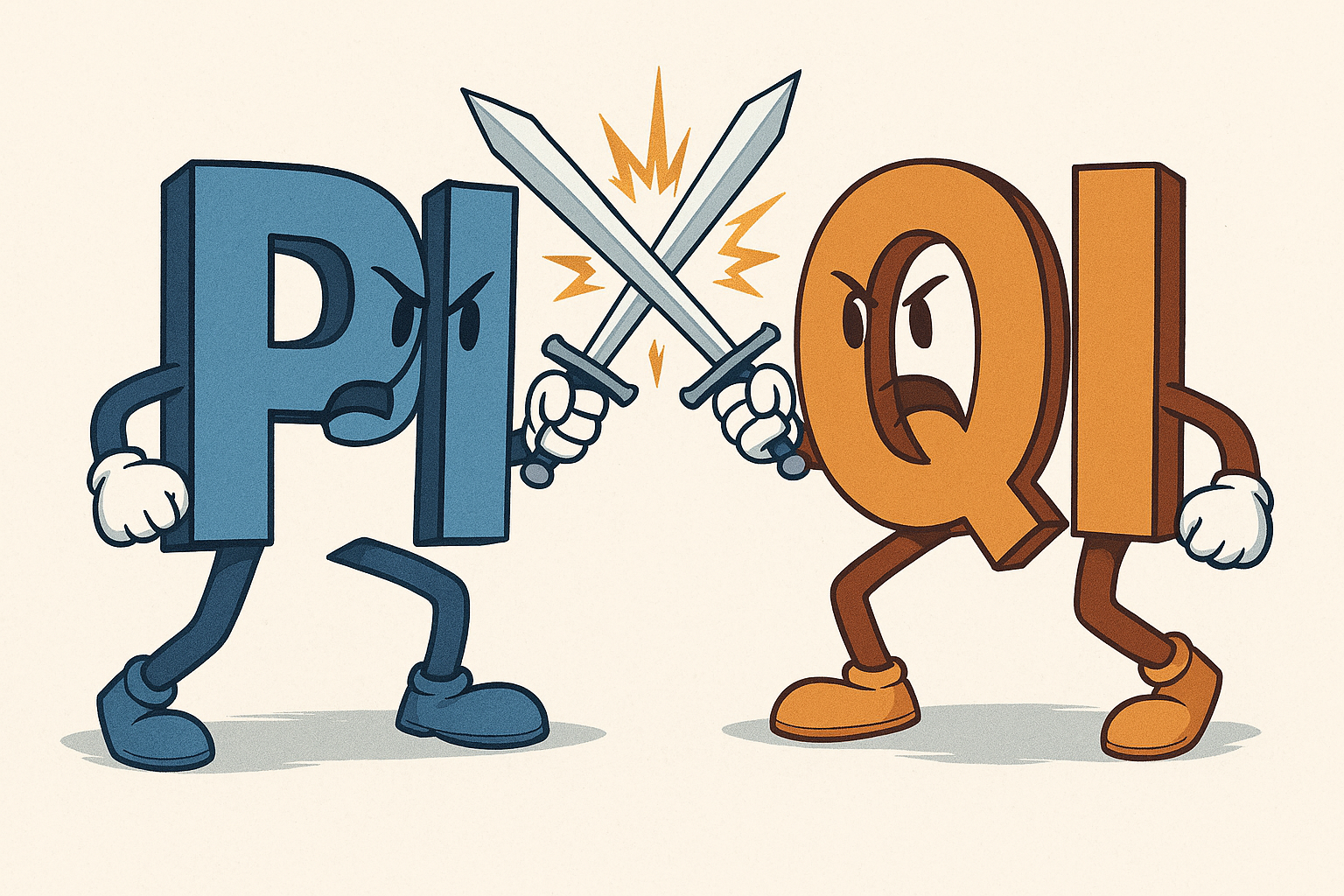
In the high‑stakes world of trauma care, where seconds matter and documentation can feel like a full‑contact sport, two champions of better outcomes often get confused for one another: Performance Improvement (PI) and Quality Improvement (QI). They may sound like siblings who steal each other’s clothes, but in practice, they play distinct—and equally essential—roles on the trauma team.
What’s the Big Difference?
Let’s imagine trauma care as a busy emergency department on a Saturday night. QI is the clinician making sure the chest tube tray actually has all the parts before they’re needed. PI is the follow‑up detective asking why the tray was missing parts in the first place and making sure it never happens again.
Quality Improvement, particularly in healthcare, focuses on the systematic, data‑driven refinement of clinical processes to improve patient outcomes (e.g., reducing complications or hospital‑acquired infections) (Welly, 2025).
Performance Improvement, particularly in trauma programs, takes a broader, system‑wide look at how care is delivered—from workflows to communication patterns to resource availability. It enhances efficiency, effectiveness, and overall system performance (White, n.d.; Snavely, 2020).
While they overlap—and occasionally arm‑wrestle for airtime—each serves a different strategic purpose.
QI: Clinical Precision in Action
In trauma care, QI tends to zero in on specific clinical measures. Think of it as the “measure twice, cut once” approach to patient care.
QI programs often use audit filters, benchmarks, and structured plans to ensure care is consistent and evidence‑based (Washington State DOH, 2021).
Examples include:
Reducing time to CT for head‑injured patients
Ensuring antibiotics are delivered within one hour for open fractures
Standardizing resuscitation practices based on current evidence
QI is all about reliability, reproducibility, and minimizing variation—the clinical equivalent of making sure the left hand always knows what the right hand is doing.
PI: The Trauma System’s Internal Affairs Division
If QI is about tightening screws, PI is about redesigning the whole toolkit. PI dives into system performance, identifying and investigating issues such as communication breakdowns, delays in activation, or lapses in documentation quality (White, n.d.).
Trauma PI frameworks typically include:
Issue identification (audit filters, staff reports, registry triggers)
Issue validation (chart review, timeline creation)
Corrective action (education, policy revision, system redesign)
Re‑evaluation (closing the loop to ensure the fix actually fixed the problem)
PI recognizes what seasoned trauma coordinators already know: rarely is one person the problem—systems usually are. This aligns with modern trauma philosophy, which shifted away from “gotcha” peer review toward a systems‑based performance and patient safety approach (Snavely, 2020).
Where PI and QI Hold Hands
Even if they travel different paths, PI and QI ultimately meet at the same destination: better patient outcomes.
Both rely heavily on:
Data (if it isn’t documented, it didn’t happen—and you can’t fix what you can’t see)
Standardized methodologies like PDSA cycles, Lean, and Six Sigma (Welly, 2025)
Interdisciplinary engagement, especially in trauma, where teamwork is a survival skill
The difference? QI is clinical; PI is strategic. QI fine‑tunes the engine; PI evaluates whether the whole vehicle is roadworthy.
Why the Distinction Matters in Trauma Care
Trauma centers are verified on their ability to run mature PI processes, not just clinical QI projects. In fact, PI shortcomings are among the most common reasons trauma centers are cited during verification reviews (White, n.d.).
Understanding what belongs in QI versus PI helps trauma programs:
Allocate resources effectively
Avoid duplication of effort
Strengthen documentation and review processes
Build resilient systems capable of learning from every patient encounter
In short: the distinction isn’t academic—it’s operational.
Strengthen Your Trauma PI & QI Partnership
Whether you're a trauma coordinator, ED nurse, or physician champion, now is the perfect time to:
Review your PI Plan—is it robust, current, and consistently followed?
Evaluate your QI Measures—do they truly reflect opportunities to improve patient outcomes?
Close the loop on identified issues—tracking is good, fixing is better, verifying the fix is best.
Get your team engaged—trauma quality is a team sport, not a solo event.
Trauma patients depend on us not only to act quickly, but to learn continuously. When PI and QI work together, the entire trauma system becomes sharper, safer, and more effective.
Let’s make PI and QI the dynamic duo your trauma program deserves.
References
Snavely, T. (2020). Pennsylvania Trauma Systems Foundation: Performance improvement primer. https://www.ptsf.org/wp-content/uploads/2020/10/PTSF_PI_Primer_Updated.pdf
Washington State Department of Health. (2021). Trauma quality improvement guideline. https://doh.wa.gov/sites/default/files/2022-02/530247-TraumaQIGuideline.pdf
Welly. (2025). What is the difference between quality improvement and performance improvement in healthcare? https://welly.it.com/what-is-the-difference-between-quality-improvement-and-performance-improvement-in-healthcare
White, C. (n.d.). Trauma performance improvement. Sutter Roseville Medical Center. https://www.traumamanagersca.org/_docs/Trauma_Performance_Improvement.White_.pdf
