
Trauma Center Challenges and How to Overcome Them
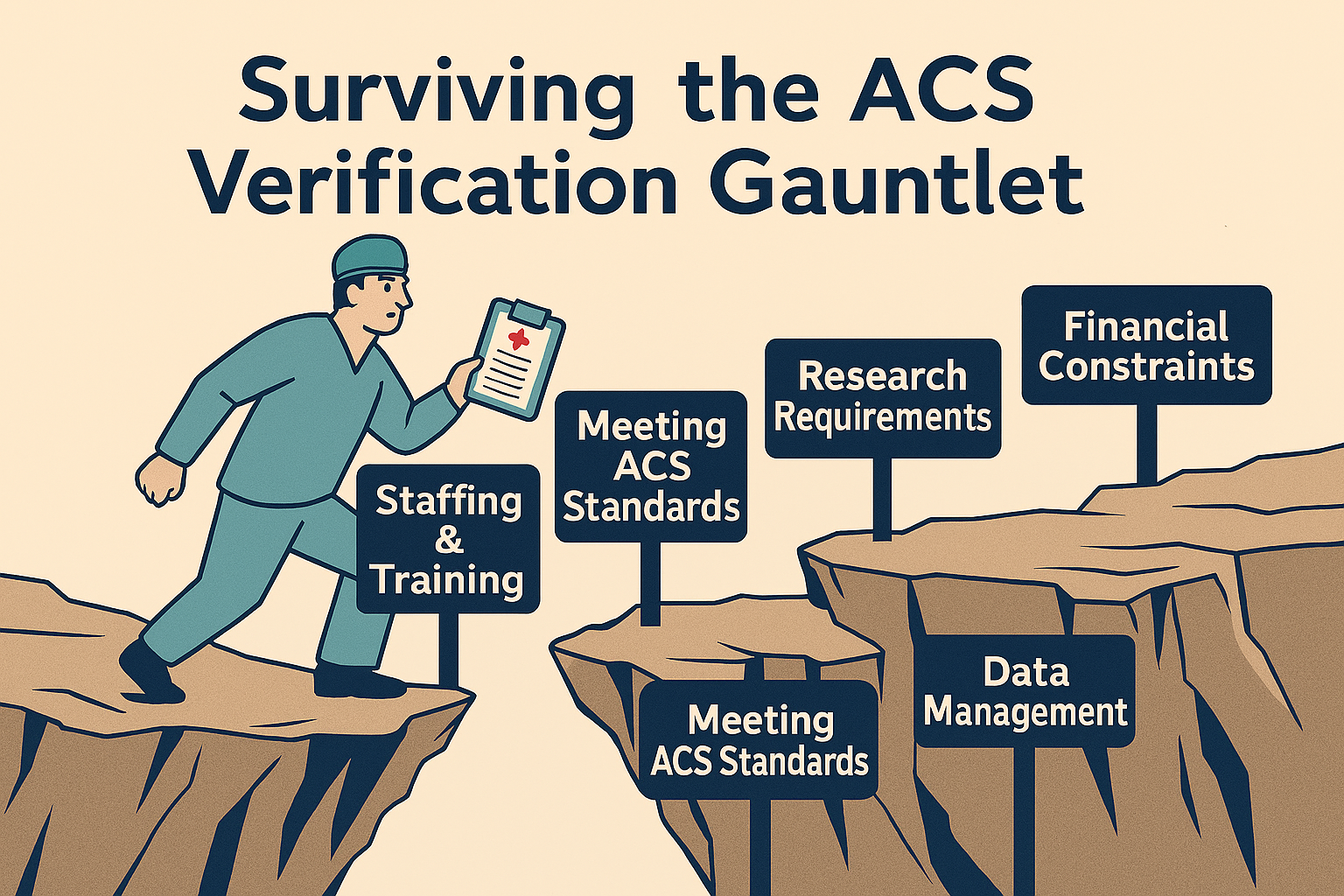
Preparing for American College of Surgeons (ACS) verification is not unlike preparing for a high-stakes performance review—except the reviewers know exactly where you keep your policies, how your PI loop works, and whether your registry team is six months behind on abstraction. Trauma centers nationwide continue to navigate this complex terrain, all while balancing patient care, staffing shortages, and budgets that do not always match their ambitions.
But good news: these challenges are survivable. With strategy, structure, and a moderate amount of caffeine, trauma programs can not only meet ACS expectations but thrive under them.
1. Staffing & Training: Because Trauma Centers Can't Run on Adrenaline Alone
Recruiting and maintaining experienced trauma nurses is increasingly difficult, particularly as trauma registry and program staffing requirements tighten under ACS 2022 standards (Fogut, 2023). Chronic staffing shortages make ongoing education and competency maintenance even more challenging.
Strategies:
- Create a trauma nurse fellowship or onboarding academy.
- Leverage simulation labs.
- Offer cross-training incentives.
- Use micro-learning modules
2. Meeting ACS Standards: Turning a Binder of Standards into a Playbook
ACS standards require robust infrastructure, from CAISS-certified registrars to structured registry oversight (Fogut, 2023). Verification readiness becomes a lifestyle commitment.
Strategies:
- Develop a year-round verification calendar.
- Establish an interdisciplinary trauma operations committee.
- Invest early in registrar certification.
- Conduct mock surveys.
3. Research Requirements: Level I Centers vs. Post‑Pandemic Reality
The COVID‑19 pandemic disrupted trauma research operations. Level I centers reported decreased trauma volumes, halted studies, and diverted research personnel—making it harder to meet ACS requirements (Madayag et al., 2021).
Strategies:
- Form inter-hospital research collaboratives.
- Dedicate weekly protected time for investigators.
- Employ non-physician research professionals.
- Create rolling publication schedules.
4. Financial Constraints: Trauma Excellence on a Budget
Trauma readiness costs can exceed $10 million annually for Level I centers (American College of Surgeons, 2024; Fracasso & Ahmed, 2024).
Strategies:
- Perform annual trauma program cost-benefit analyses.
- Audit trauma activation fee structures.
- Seek grant opportunities.
- Share regional resources.
5. Data Management & Performance Improvement (PI): The Heart and Hard Drive of Trauma Programs
Trauma data abstraction errors and registry backlogs are common pitfalls (Chisolm, 2021). Consistent validation and PI documentation are essential.
Strategies:
- Create weekly abstraction targets.
- Map the PI workflow.
- Use data dashboards.
- Hold monthly multidisciplinary PI meetings.
Now is the time for trauma centers to shift from reactive readiness to intentional, year‑round excellence.
Whether you're strengthening staffing models, refining data processes, or reinventing research infrastructure, take the next step today: gather your leadership team, assess your current gaps, and build a strategic ACS‑readiness roadmap that positions your trauma program for long‑term success. Your patients—and your future verification reviewers—will thank you.
References
American College of Surgeons (ACS). (2024). Statement on trauma activation fees. https://www.facs.org/about-acs/statements/statement-on-trauma-activation-fees/
Chisolm, A. (2021). How to recognize when your trauma center is in jeopardy. HealthCare Buriness News. https://www.dotmed.com/news/story/55180
Fojut, R. (2023). Everything about trauma registry in the new ACS trauma standards. Trauma System News. https://trauma-news.com/2023/02/everything-about-trauma-registry-in-the-new-acs-trauma-standards/
Fracasso J.L & Ahmed N. (2024) Trauma centers: An underfunded but essential asset to the community. Trauma Surgery & Acute Care Open, 9(1). https://doi.org/10.1136/tsaco-2024-001436
Madayag, R. M., Sercy, E., Berg, G. M., Banton, K. L., Carrick, M., Lieser, M., Tanner, A., & Bar‑Or, D. (2021). Effect of the COVID‑19 pandemic on the ability of level 1 trauma centers to meet American College of Surgeons research requirements. Trauma Surgery & Acute Care Open, 6(1), e000692. https://doi.org/10.1136/tsaco-2021-000692
