
Airway Indicators That Should Make You Nervous: A Look at Escalation in Trauma Care
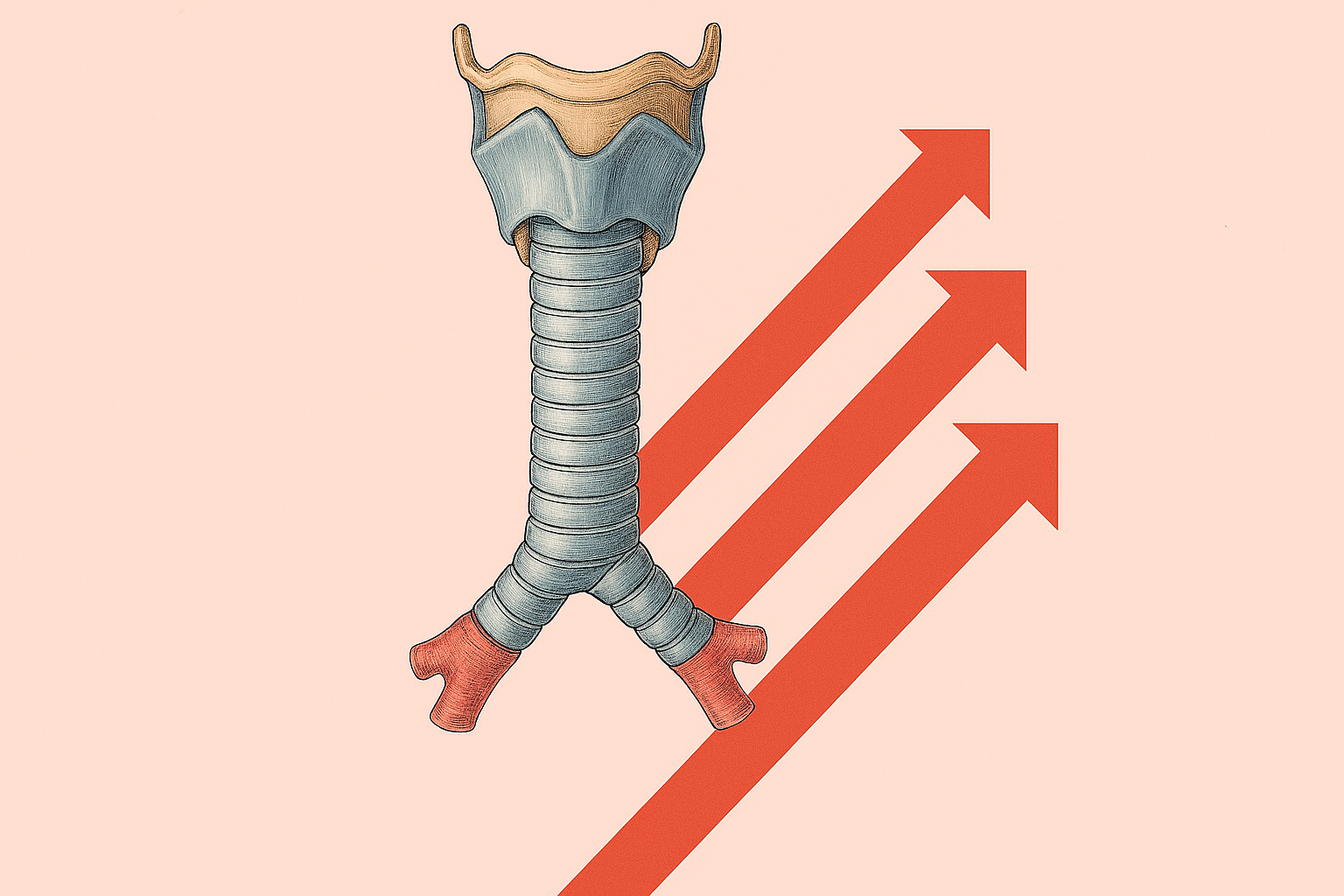
In trauma care, the airway is the diva of physiologic priorities—temperamental, high‑maintenance, and absolutely unwilling to wait its turn. When the airway starts acting up, clinicians must act fast. Early recognition of subtle (and not-so-subtle) indicators is essential to prevent deterioration, maintain oxygenation, and avoid an emergent surgical airway—few people’s idea of a good time. This article walks through conceptual airway red flags that should prompt escalation, all while keeping things just witty enough to stay awake during a long shift.
Why Airway Assessment Matters More Than Your Morning Coffee
Trauma patients are notoriously unpredictable. A patient may look stable one moment and begin to decline the next, especially if evolving edema, bleeding, or altered mental status begins to challenge their ability to maintain their own airway (American College of Surgeons, 2022). Escalation of concern—calling for backup, activating anesthesia, or preparing advanced airway equipment—is critical the moment danger signs appear.
In trauma, hesitation is the enemy; early recognition is the ally.
Conceptual Indicators That Should Trigger Airway Escalation
1. Hoarseness, Stridor, or Noisy Breathing: The Airway’s Passive‑Aggressive Cry for Help
Audible breathing abnormalities—stridor, gurgling, snoring—are classic signs of partial obstruction. These sounds are the airway’s version of, “I’m not okay, but I’m not going to tell you directly.” Trauma‑related airway noise may indicate laryngeal injury, soft‑tissue swelling, or blood obstructing the upper airway (Walls et al., 2018).
Escalation trigger: Any new or worsening noisy respirations.
2. Facial or Neck Trauma: Where There’s Swelling, Trouble Isn’t Far Behind
When blunt or penetrating trauma involves the face, mandible, or neck, clinicians should assume the airway is on a countdown timer. Expanding hematomas, soft‑tissue edema, and structural instability may not cause immediate obstruction—but they often progress rapidly (Vaishnavi et al., 2025).
Escalation trigger: Evidence of neck swelling, subcutaneous emphysema, expanding hematoma, or airway deviation.
3. Altered Mental Status: When the Brain Stops Babysitting the Airway
The airway relies heavily on consciousness. A confused or obtunded patient may lose protective reflexes or fail to position themselves to maintain airway patency (American College of Surgeons, 2022). Trauma‑associated hypoxia can also accelerate mental decline, creating a vicious cycle that spirals fast.
Escalation trigger: GCS ≤ 8 or any decline in neurologic status that compromises airway protection.
4. Excessive Bleeding or Vomiting: The Airway’s Version of a Slip-and-Slide (A Bad One)
Blood, secretions, and gastric contents compromise both airway patency and visibility during intubation. Persistent bleeding from facial trauma or active vomiting can rapidly overwhelm suction capacity. As the saying goes, “You can’t intubate what you can’t see” (Walls et al., 2018).
Escalation trigger: Inability to clear the airway effectively with suction or ongoing obstruction from fluids.
5. Respiratory Fatigue: When the Patient Looks Tired Enough to Quit
Signs of respiratory distress—tachypnea, accessory‑muscle use, tripoding—can signal impending airway failure. Trauma patients compensate impressively… until they don’t. Once fatigue sets in, decompensation can be precipitous.
Escalation trigger: Increasing work of breathing, declining oxygen saturation, or inability to maintain adequate ventilation despite oxygen therapy.
6. “Gut Feeling” and Provider Concern: Intuition Is Data Too
Experienced clinicians often notice intangible cues: the subtle drooping of a traumatized airway, the “something’s not right” vibe from a patient who looks precariously stable. Studies acknowledge that clinical gestalt remains a valid and often lifesaving predictor in trauma airway management (Brown et al., 2020; Rodríguez-Guevara et al., 2025; Shiber et al., 2023).
Escalation trigger: Any situation where the provider believes the window for safe intubation is closing.
When to Pull the Alarm: Principles of Escalation
Escalation should occur early—not once obstruction becomes dramatic. Key escalation steps include:
Calling anesthesia or surgical support
Preparing for rapid sequence intubation
Setting up adjuncts (e.g., video laryngoscopy, bougie)
Considering the potential need for a surgical airway
Activating difficult‑airway protocols if appropriate
Swift decision‑making ensures that the controlled airway intervention doesn’t turn into a chaotic one.
Conclusion
In trauma care, airway uncertainty is never something to “wait and see.” Airway indicators—whether noisy breathing, structural injury, declining consciousness, or simply the clinician’s intuition—are invitations to escalate early, assemble backup, and prepare for worsening obstruction. By staying vigilant and proactive, clinicians maintain the upper hand in situations where seconds matter and the airway is often the first system to rebel.
Airway compromise doesn’t send a calendar invite—it shows up unannounced and demands immediate attention. As trauma clinicians, your vigilance, intuition, and swift action are the difference between a controlled airway and a crisis you didn’t ask for. So take the indicators seriously. Listen for the stridor that whispers trouble, watch the facial trauma that threatens to swell its way into a catastrophe, and trust your clinical gut—even when it’s inconvenient.
Escalate early. Gather your team. Prepare your tools.
Because when the airway starts misbehaving, waiting is never the winning strategy.
Your future self—and your patients—will thank you for acting before the airway demands a dramatic exit.
References
American College of Surgeons. (2022). ATLS: Advanced Trauma Life Support (11th ed.). https://www.facs.org/quality-programs/trauma/atls/
Brown, C. V. R., Inaba, K., Shatz, D. V., Moore, E. E., Ciesla, D., Sava, J. A., Alam, H. B., Brasel, K., Vercruysse, G., Sperry, J. L., Rizzo, A. G., & Martin, M. (2020). Western Trauma Association critical decisions in trauma: Airway management in adult trauma patients. Trauma Surgery & Acute Care Open, 5(1), e000539. https://doi.org/10.1136/tsaco-2020-000539
Rodríguez-Guevara, I., Reyes-Monge, R. A., Toledo-Palacios, H. A., González–Sotelo, S., Pérez-Nieto, O. R., & Henales-Ocampo, A. S. (2025). Airway management in patients with acute traumatic brain injury: An evidence-based approach. ICU Management & Practice, 25(3).
URL: https://healthmanagement.org/c/icu/IssueArticle/airway-management-in-patients-with-acute-traumatic-brain-injury-an-evidence-based-approach
Shiber, J., Fontane, E., Patel, J., Akinleye, A., Kerwin, A., Chiu, W., & Scalea, T. (2023). Gestalt clinical severity score (GCSS) as a predictor of patient severity of illness or injury. The American Journal of Emergency Medicine, 61, 101–105. https://doi.org/10.1016/j.ajem.2023.01.005
Vaishnavi, B. D., Gupta, P., Goyal, S., & Goyal, A. (2025). Airway management in acute trauma. In Special Considerations in Trauma Care (pp. 65–75). Springer Nature.
Walls, R. M., Hockberger, R. S., & Gausche-Hill, M. (2018). Rosen’s Emergency Medicine: Concepts and Clinical Practice (9th ed.).Elsevier.
