
Junctional Bleeding: Why Trauma’s Most Awkward Real Estate Still Wins Fights
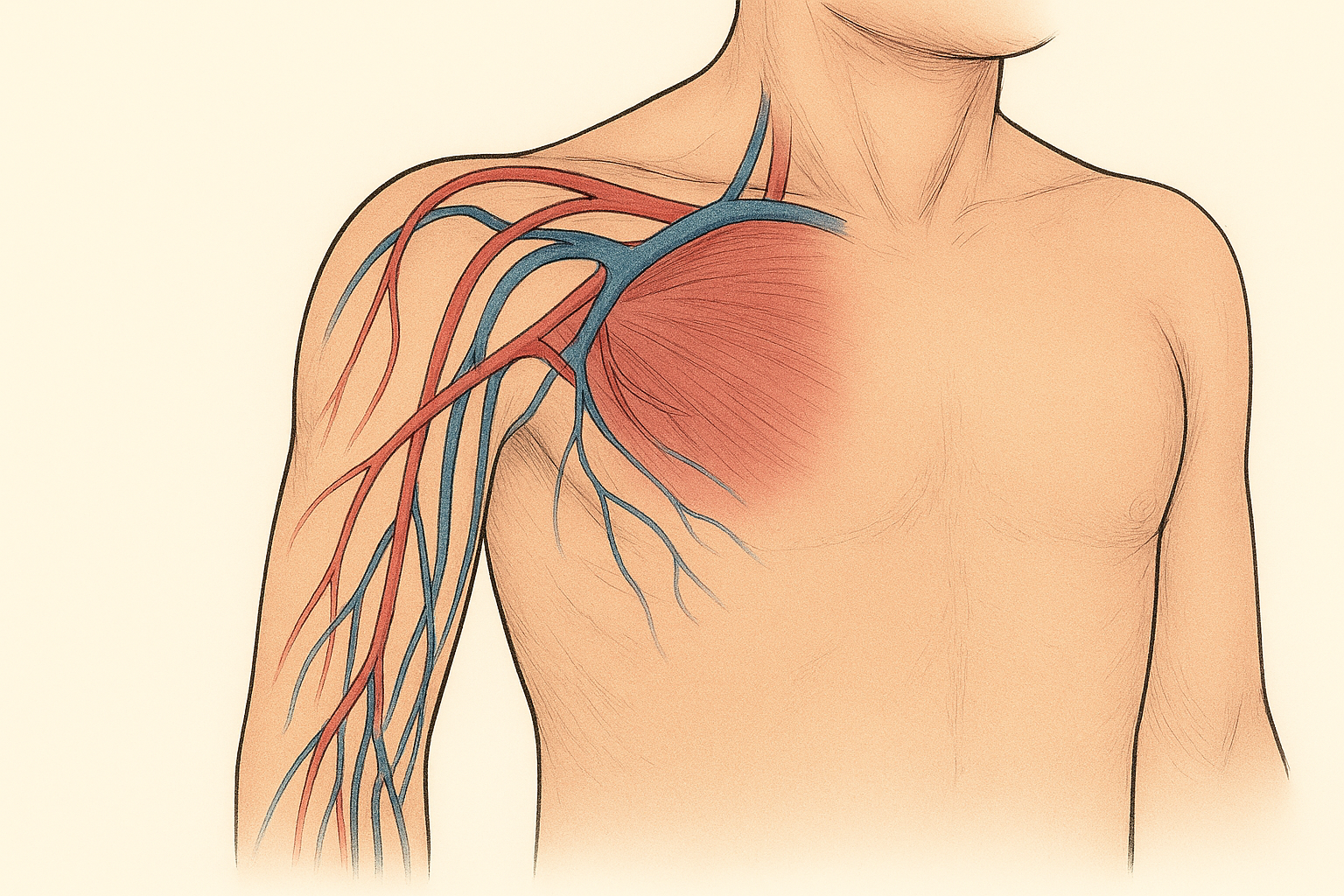
If hemorrhage control were a dinner party, extremity bleeding would be the polite guest—easy to seat, easy to manage, perfectly content with a tourniquet. Junctional bleeding, on the other hand, shows up uninvited, wedges itself between the torso and limb, and refuses every polite intervention you brought. It’s trauma’s most inconvenient problem—and the more we fix extremity bleeding, the more junctional hemorrhage steps into the spotlight (Kotwal et al., 2013; van Oostendorp et al., 2016).
What is it? Bleeding at the “hinge points”—groin, axilla, perineum, buttocks, and base of the neck—where large vessels run deep and circumferential compression just doesn’t work. In modern systems, junctional and truncal bleeding remain among the leading causes of potentially preventable death, often occurring before patients reach definitive care (Kotwal et al., 2013; van Oostendorp et al., 2016).
And yes, it’s not just a battlefield issue. A 2024 Dutch registry analysis found 14.5% of major trauma patients met criteria for non‑compressible truncal or junctional hemorrhage; more than 60% might have benefited from advanced bleeding control, with 31.8% mortality—and each Level‑1 center saw such a patient about every 24 days (Vrancken et al., 2024).
Why Junctional Bleeding Is So Tricky
1) The anatomy is not on your side
These regions pack big arteries, soft tissue, nerves, and complex bony contours. Vessels are deep and mobile; there’s no cylinder to squeeze, so classic limb tourniquets fail by design (Kotwal et al., 2013; Humphries et al., 2022).
2) Standard tourniquets don’t work here
Conventional tourniquets rely on circumferential pressure above the wound; junctional wounds are too proximal and lack the geometry needed for occlusion. This limitation became obvious when military tourniquet success shifted fatal hemorrhage toward junctional sites (Kotwal et al., 2013; Meusnier et al., 2016).
3) It bleeds fast—and early
Junctional injuries often involve the femoral or subclavian system and can rapidly lead to shock and death before hospital arrival, which is why prehospital recognition and decisive action matter (Bulger et al., 2014; van Oostendorp et al., 2016).
The Toolbox: What Actually Works (When You Work It)
Start with fundamentals: direct pressure + hemostatic wound packing
Your first move remains aggressive wound packing with a hemostatic gauze and firm direct pressure—simple, reproducible, and effective when done correctly and held long enough (Bulger et al., 2014; Committee on Tactical Combat Casualty Care [CoTCCC], 2024).
Pro tip: Pack to the source, layer by layer, and hold uninterrupted pressure for the recommended interval; re‑assess only purposefully. That’s doctrine across ACS‑COT and TCCC curricula (Bulger et al., 2014; NAEMT, 2017).
Purpose‑built junctional tourniquets (JTQs)
When packing and pressure aren’t enough—or you need your hands back—junctional tourniquets (e.g., CRoC, SAM JT, JETT; AAJT for specific indications) can provide targeted compression of deep vessels against bone (Kotwal et al., 2013).
Effectiveness & usability: Controlled and simulation data show high rates of arterial flow interruption; the SAM JT is often faster to deploy than CRoC in hands‑on comparisons, though both can be effective (Meusnier et al., 2016; Humphries et al., 2022).
Real‑world use: Combat registry reports describe limited but successful prehospital JTQ applications; documentation and device selection remain challenges, underscoring the need for training and protocols (Schauer et al., 2018).
Adjuncts you should know
Hemostatic adjuncts for narrow‑track wounds (e.g., XStat™): Compressed sponges designed for junctional tracts (groin/axilla) can achieve rapid hemostasis when tourniquets won’t work or packing is limited by geometry; CoTCCC added XStat as an adjunct for junctional hemorrhage (Sims et al., 2016).
Wound clamps / iTClamp®: Scalp and some junctional lacerations may benefit from rapid tissue approximation to create a pressure chamber; feasibility is supported but clinical data quality is variable (Humphries et al., 2022; van Oostendorp et al., 2016).
REBOA and pelvic stabilization: For NCTJH with pelvic or infradiaphragmatic bleeding, REBOA and pelvic binders are part of advanced algorithms and may reduce mortality when used by trained teams under protocols (Vrancken et al., 2024; van Oostendorp et al., 2016).
Civilian vs. Combat: Same Anatomy, Different Zip Codes
Although device development and early evidence grew out of the battlefield, civilian trauma systems face the same anatomical puzzle (van Oostendorp et al., 2016). The 2024 Dutch registry data emphasize that a meaningful fraction of civilian major trauma involves junctional or truncal bleeding—and many of those patients may benefit from advanced hemorrhage control if recognized early (Vrancken et al., 2024).
Translation: the body doesn’t care whether the mechanism was an IED or a sedan.
What This Means for Your Team (and Your Performance Improvement)
Teach recognition like your outcomes depend on it—because they do. Build “find the junctional bleed” into first‑minute assessments and simulations (Bulger et al., 2014; CoTCCC, 2024).
Make hemostatic packing a muscle memory skill. Score it in skills labs (depth, speed, pressure duration) and review in PI meetings (Bulger et al., 2014; NAEMT, 2017).
Stock and train on at least one CoTCCC‑recommended JTQ. Choose based on your environment (weight, speed, ease), and track applications/outcomes to refine protocols (Kotwal et al., 2013; Meusnier et al., 2016).
Codify escalation pathways. Define when to call for REBOA, pelvic stabilization, or operative control; ensure ED–OR–IR coordination is rehearsed (Vrancken et al., 2024; van Oostendorp et al., 2016).
Update Stop the Bleed‑style education locally. Emphasize that tourniquets don’t fix everything; teach the public and first responders direct pressure and wound packing for groin/axilla/neck (Bulger et al., 2014; CoTCCC, 2024).
Call to Action
Junctional bleeding is a low‑frequency, high‑consequence threat that rewards teams who practice the awkward stuff. This month, commit to one change you can measure:
Add a junctional hemorrhage station to your next simulation day and score mastery. (Time to pack, pressure duration, device application time.) (NAEMT, 2017; CoTCCC, 2024).
Put a JTQ and hemostatic gauze on every resus cart and EMS rig, and verify staff competency in your PI loop (Kotwal et al., 2013; Bulger et al., 2014).
Create a triggered pathway for suspected NCTJH (pelvic binder, consult for REBOA, rapid move to definitive control) and audit compliance quarterly (Vrancken et al., 2024; van Oostendorp et al., 2016).
When bleeding happens where limbs meet the torso, hesitation is lethal. Confidence is earned—rep by rep—long before the pager goes off.
References
Bulger, E. M., Snyder, D., Schoelles, K., …McSwain, N. (2014). An evidence‑based prehospital guideline for external hemorrhage control. Prehospital Emergency Care, 18(1), 163-173. https://www.ems.gov/assets/EBG_ExternalHemorrhageControl_ACS-COT_2014.pdf
Committee on Tactical Combat Casualty Care (CoTCCC). (2024, April 17). TCCC Course: Massive hemorrhage control in Tactical Field Care [Presentation Slides]. https://tccc.org.ua/files/downloads/module-6-massive-hemorrhage-control-in-tfc-en.pdf
Humphries, R., Naumann, D. N., & Ahmed, Z. (2022). Use of haemostatic devices for junctional and abdominal traumatic haemorrhage: A systematic review. Trauma Care, 2(1), 23–34. https://doi.org/10.3390/traumacare2010003
Joint Trauma System (JTS). (2018). Tactical Combat Casualty Care (TCCC) guidelines—Current. https://jts.health.mil/index.cfm/committees/cotccc/guidelines
Kotwal, R. S., Butler, F. K., Gross, K. R., …Bailey, J. A. (2013). Management of junctional hemorrhage in TCCC: Proposed change 13‑03. Journal of Special Operations Medicine, 13(4), 85–93. https://apps.dtic.mil/sti/pdfs/ADA614691.pdf
Meusnier, J.‑G., Dewar, C., Mavrovi, E., Caremil, F., W., P.-F., & Martinez, J.-Y. (2016). Evaluation of two junctional tourniquets used on the battlefield: CRoC® versus SAM® JT. Journal of Special Operations Medicine, 16(3), 41–47. https://jsomonline.org/wp-content/uploads/2024/02/2016341Meusnier.pdf
NAEMT. (2017). Tactical Field Care (TCCC‑MP Guidelines 170131) [PowerPoint Presentation]. https://www.naemt.org/docs/default-source/education-documents/tccc/tcccmp_1708/3-tfc-1.pdf
Sims, K., Bowling, F., Montgomery, H., Dituro, P., Kheirabadi, & Butler, F. (2016). TCCC Guidelines: Change 15‑03—The adjunctive use of XStat™ compressed hemostatic sponges. Journal of Special Operations Medicine, 16(1), 19-28. http://naemt.org/docs/default-source/education-documents/tccc/tccc-updates_092017/tccc-reference-materials/05-tccc-change-documents/15-03-tccc-sims-xstat-jsom-2016.pdf
van Oostendorp, S. E., Tan, E. C. T. H., & Geeraedts, L. M. G. (2016). Prehospital control of life‑threatening truncal and junctional haemorrhage. Scandinavian Journal of Trauma, Resuscitation and Emergency Medicine, 24, 110. https://doi.org/10.1186/s13049-016-0301-9
Vrancken, S. M., de Vroome, M., van Vledder, M. G., …van, Waes, O. J. F. (2024). Non‑compressible truncal and junctional hemorrhage: A retrospective analysis quantifying potential indications for advanced bleeding control in Dutch trauma centers. Injury, 55(1), 111183. https://www.injuryjournal.com/article/S0020-1383%2823%2900900-2/fulltext
Schauer, S. G., April, M. D., Fisher, A. D., …Gurney, J. M. (2018). Junctional tourniquet use during US combat operations in Afghanistan: The prehospital trauma registry experience. Journal of Special Operations Medicine, 18(3), 71–74. https://jsomonline.org/wp-content/uploads/2024/02/2018271Schauer.pdf
