
Tourniquets: Indications (Concept Only)
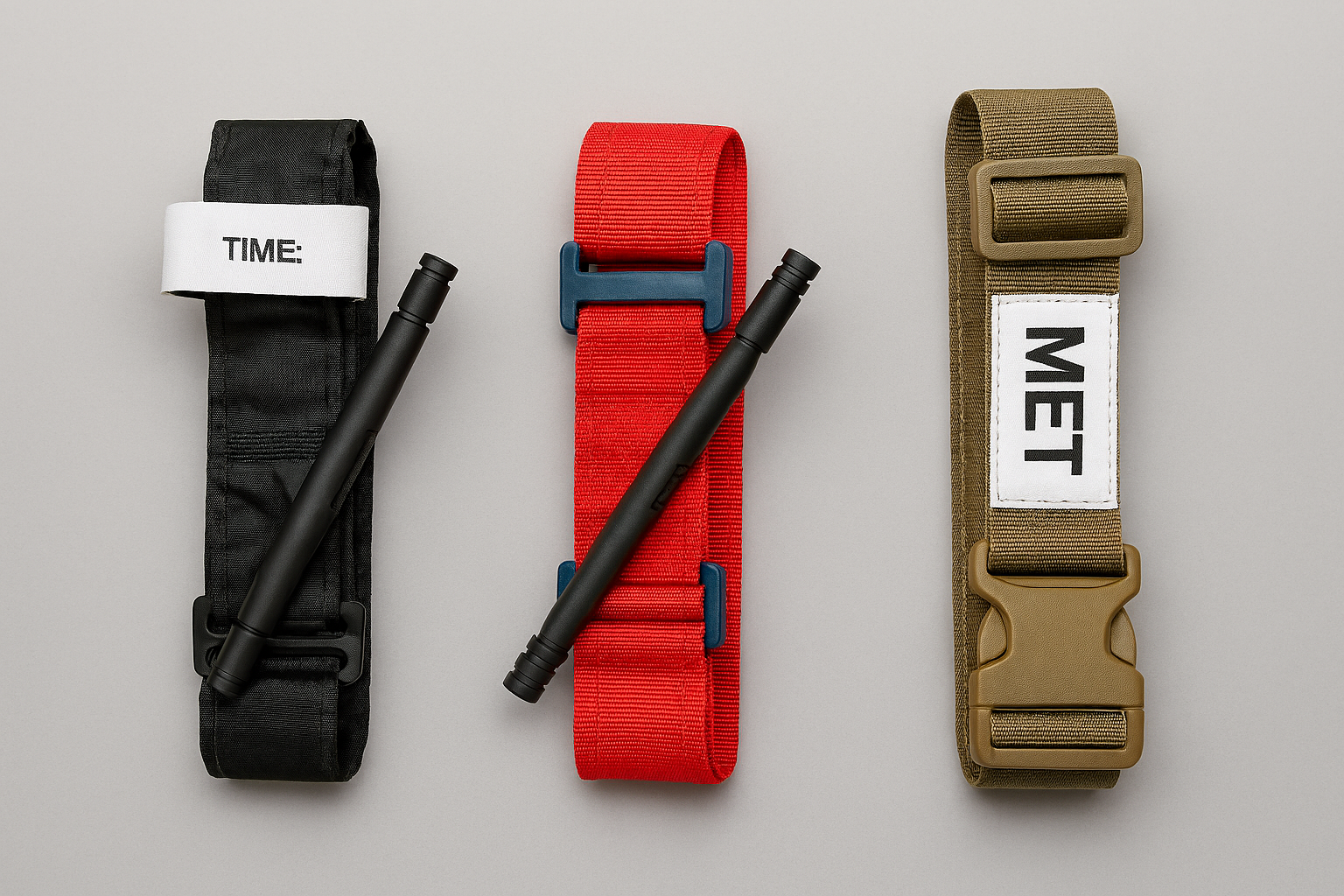
When compression is not just a hug, but a life-saving decision
Tourniquets have had a remarkable public relations comeback. Once feared as limb-dooming relics of bygone medicine, they are now celebrated as decisive tools against one of trauma care’s most unforgiving enemies: uncontrolled hemorrhage. Thanks to modern evidence, military experience, and public health campaigns like Stop the Bleed, tourniquets have moved from the margins to the mainstream. Still, the key to their benefit lies not in enthusiasm, but in indication—knowing when a tourniquet is conceptually appropriate, and just as importantly, when it is not (Mikdad et al., 2021).
This article explores tourniquet indications at a conceptual level only, focusing on clinical reasoning rather than technique. Think of it as the “why” without the “how.”
The Big Picture: Why Indications Matter
Hemorrhage remains a leading cause of preventable death in trauma, particularly from severe extremity injuries (Butler et al., 2024). Unchecked bleeding can overwhelm physiology in minutes, long before definitive care is available. Tourniquets are powerful because they decisively interrupt blood flow—but that same power means indiscriminate use can introduce avoidable complications (Mikdad et al., 2021).
In other words, tourniquets are not “extra-strong bandages.” They are escalation tools, reserved for situations where simpler measures are insufficient or impractical (Holcomb et al., 2015). Proper indication balances urgency, anatomy, and risk.
Core Indication: Life-Threatening Extremity Hemorrhage
At its conceptual core, the primary indication for tourniquet use is life-threatening external bleeding from an extremity (Butler et al., 2024; Shackelford et al., 2015). This includes hemorrhage that is:
Rapid and ongoing
Visibly severe (e.g., pooling, spurting, or soaking through dressings)
Leading—or likely to lead—to shock
The emphasis here is not on a specific wound type, but on physiologic threat. Tourniquets are indicated when bleeding poses an immediate risk to life and cannot be reliably controlled by less invasive means in the available time (Mikdad et al., 2021).
When Time, Environment, or Resources Are the Enemy
Sometimes the indication is not just the wound, but the context. In high-threat, chaotic, or resource-limited environments—such as mass casualty incidents or austere prehospital settings—tourniquets may be conceptually indicated earlier in the decision-making process (Butler et al., 2024; Holcomb et al., 2015).
In these scenarios, the logic is pragmatic: rapid hemorrhage control may be necessary to allow evacuation, scene safety, or attention to other life-threatening priorities. The indication, therefore, expands beyond “failed alternatives” to include situations where alternatives are not feasible (Shackelford et al., 2015).
Traumatic Amputation and Mangled Extremities
Few indications are as clear-cut as traumatic amputation or near-amputation of a limb. In these cases, the vascular disruption is profound, and the risk of exsanguination is high. Conceptually, tourniquets are indicated because they provide the fastest and most reliable means of hemorrhage control available in the prehospital phase (Butler et al., 2024; Montgomery et al., 2019).
Here, hesitation is not caution—it is risk.
What Tourniquets Are Not Indicated For
Equally important is recognizing conceptual non-indications. Tourniquets are generally not indicated for:
Non-extremity bleeding (e.g., torso, neck)
Bleeding that is minor or controllable with direct pressure
Situations where hemorrhage control has already been achieved without escalation
Civilian studies consistently demonstrate that a substantial proportion of prehospital tourniquets are applied without a clear medical indication, exposing patients to unnecessary ischemic risk (Mikdad et al., 2021; Rothstein et al., 2019). The lesson is not to abandon tourniquets—but to sharpen judgment.
The Risk–Benefit Equation
Modern data show that when used appropriately, tourniquets are strongly associated with improved survival and relatively low complication rates (Butler et al., 2024). Complications tend to correlate with prolonged application, improper indication, or delayed reassessment rather than with the device itself (Mikdad et al., 2021).
Conceptually, the indication hinges on a simple equation:
If the risk of ongoing bleeding outweighs the risk of temporary ischemia, a tourniquet is indicated.
This framing keeps the decision patient-centered and context-aware.
From Battlefield to Sidewalk: Civilian Implications
Military medicine has shaped much of the evidence base for tourniquet use, but civilian translation requires nuance. Unlike combat zones, civilian settings may involve longer transport times, varied training levels, and a wider range of injury severity (Mikdad et al., 2021).
Public education initiatives such as Stop the Bleed have rightly emphasized empowerment—but education must include indications, not just availability (Butler et al., 2024). Knowing when not to apply a tourniquet is a marker of maturity, not hesitation.
Call to Action: Indication Is a Skill—Train It
Tourniquets save lives—but only when guided by sound clinical reasoning. Whether you are a clinician, first responder, educator, or healthcare leader, the call to action is clear:
Teach indications, not just techniques
Reinforce decision-making under pressure
Promote regular review of hemorrhage control principles
Lives are saved not by devices alone, but by professionals who understand when escalation is warranted. Master the concept, and the tool will follow.
References
Butler, F. K., Holcomb, J. B., Dorlac, W. C., Gurney, J., Inaba, K., Jacobs, L., Mabry, R., Meoli, M., Montgomery, H. R., Otten, M., Shackelford, S. A., Tadlock, M. D., Wilson, J., Humeniuk, K., Linchevskyy, O., & Danyliuk, O. (2024). Who needs a tourniquet? And who does not? Lessons learned from a review of tourniquet use in the Russo-Ukrainian war. Journal of Trauma and Acute Care Surgery, 97(2S Suppl 1), S45–S54. https://www.naemt.org/docs/default-source/education-documents/tccc/tourniquet-conversion-resources/tccc-butler-who-needs-a-tourniquet-j-trauma-2024.pdf?sfvrsn=36b0fe93_1
Holcomb, J. B., Shackelford, S. A., Butler, F. K., …Bailey, J. A. (2015). Optimizing the use of limb tourniquets in tactical combat casualty care. Journal of Special Operations Medicine, 15(3), 17–31. https://www.naemt.org/docs/default-source/education-documents/tccc/tccc-updates_092017/tccc-reference-materials/05-tccc-change-documents/14-02-tccc-shackelford-optimizing-tourniquet-use-jsom-2015.pdf
Mikdad, S., Mokhtari, A. K., Luckhurst, C. M.,…Sailiant, N. (2021). Implications of the national Stop the Bleed campaign: The swinging pendulum of prehospital tourniquet application in civilian limb trauma. Journal of Trauma and Acute Care Surgery, 91(2), 352–360. https://doi.org/10.1097/TA.0000000000003247
Montgomery, H. R., Hammesfahr, R., Fisher, A. D., Cain, J., Greydanus, D. J., Butler, F. K., Jr., Goolsby, C., & Eastman, A. L. (2019). Recommended limb tourniquets in tactical combat casualty care. Journal of Special Operations Medicine, 19(4), 37–54. https://jsomonline.org/wp-content/uploads/2024/02/2019427Montgomery.pdf
Shackelford, S. A., Butler, F. K., Kragh, J. F., Stevens, R. A., Seery, J. M., Parsons, D. L., Montgomery, H. R., Kotwal, R. S., Mabry, R. L., & Bailey, J. A. (2015). Optimizing the use of limb tourniquets in tactical combat casualty care: TCCC guidelines change 14-02. Journal of Special Operations Medicine, 15(1), 17–31. https://doi.org/10.55460/TDTK-RIN8
Rothstein, W., Kenning, K., Shipman, K., …Rodas E. (2019). Tourniquets in the era of “Stop the Bleed.” Panamerican Journal of Trauma, Critical Care & Emergency Surgery, 8(1), 56–60. https://www.pajtcces.com/abstractArticleContentBrowse/PAJT/15844/JPJ/fullText
