
Time‑to‑Bedside: Why Minutes Matter for Trauma Patients
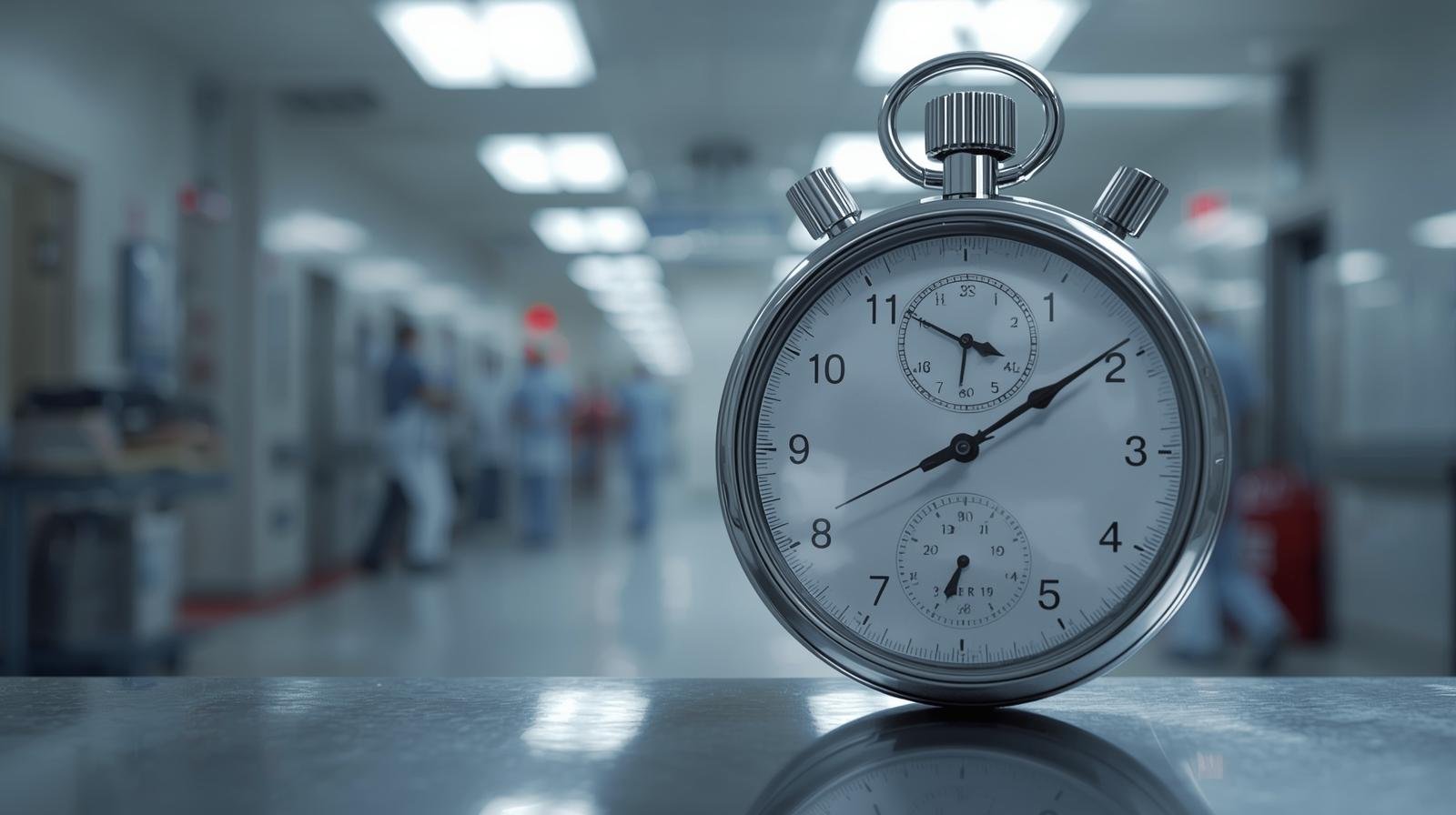
In trauma care, “time is tissue.” That mantra isn’t only a clinical truth; it’s an operational imperative. From paging systems and staffing grids to room readiness and equipment staging, non‑clinical processes can make or break time‑to‑bedside—and that time, in turn, shapes outcomes, experience, and the entire hospital flow. The evidence is clear: even modest time savings can confer survival benefit, especially for high‑acuity trauma. In prehospital research, air medical transport begins to show a survival advantage once it saves roughly 13–17 minutes compared with ground transport for patients meeting field triage criteria (Boland et al., 2025). A global scoping review likewise links shorter prehospital intervals to improved trauma outcomes, underscoring the importance of timely response and transport (Bedard et al., 2020).
The Operational Clock Starts Before Arrival
The clock doesn’t begin when the patient hits the automatic doors; it begins when the trauma activation fires. Activated traumas are a choreography of people, space, tools, and communication. When that choreography is tight, minutes evaporate and teams reach the bedside faster—setting off a cascade of downstream efficiencies. Video‑review research suggests a pragmatic “Goldilocks” window for pre‑activation time—roughly 4–7 minutes before arrival—to optimize the completion of critical actions during resuscitation (Rastegar et al., 2024; Schriner & Dumas, 2024).
Notably, real‑world practice doesn’t always land in that sweet spot (over 80% of arrivals fell outside it in one series), yet the principle holds: early, well‑timed activation facilitates faster transfusion, access, imaging, and decision‑making—provided the operational pathways (paging, room prep, blood availability, roles, and handoffs) are tuned to minimize friction (Schriner & Dumas, 2024).
Trauma Team Arrival Time: The First KPI You Can See
Think of trauma team arrival time as the first measurable handoff in the trauma relay race. When teams assemble promptly at the bedside, everything downstream accelerates—labs, imaging, resuscitation decisions, and definitive disposition. Organizations that leverage real‑time analytics to track activations and arrival times have demonstrated reductions in ED length of stay for activated trauma patients, especially at Level II centers, by using registry‑driven dashboards to close gaps in team mobilization and room readiness (Mission Health / Health Catalyst, 2025a, 2025b).
Yet not all systems are built alike. Even after accounting for similar injury severity, Level I trauma centers often experience longer ED disposition times than Level II centers—signaling the deeper complexity and bottleneck risks in larger, more specialized environments (Lane et al., 2024). This difference spotlights the role of operational design (wayfinding, bay availability, staffing, and intra‑hospital logistics) in time‑to‑bedside performance.
Why Minutes Matter (Even Outside the Trauma Bay)
Minutes gained by streamlined operations affect more than mortality:
Patient experience & safety. Faster bedside response reduces anxiety and increases the probability that critical actions occur without delay. Systems research consistently ties timeliness and throughput to better outcomes and fewer adverse events. Position statements on ED crowding connect delays to increased morbidity, medical errors, and patients leaving without being seen (Emergency Nurses Association, 2018). Regulators track timeliness because shrinking ED time improves access and quality (Joint Commission, n.d.).
Staff efficiency & burnout. Clear roles and standardized activation workflows cut cognitive load and “activation noise,” allowing clinicians to focus on care instead of logistics (Schriner & Dumas, 2024).
Hospital flow & resource use. Time‑to‑bedside improvements often correlate with shorter ED length of stay and cleaner handoffs to imaging, OR, ICU, or inpatient floors (Mission Health / Health Catalyst, 2025a, 2025b).
Activated Traumas: Where Operational Prep Meets Clinical Urgency
Activation triggers a cascade: paging the right roles; readying bays and equipment; staging uncrossmatched blood; aligning transport updates; and pre‑assigning documentation and handoff responsibilities. Quality‑improvement work shows that simple location and process changes (e.g., placing blood products in optimally accessible ED locations, standardizing IV access pathways, and mentoring newer staff) can shave minutes off transfusion times and accelerate resuscitation—tangible wins for time‑to‑bedside (Schriner & Dumas, 2024).
Prehospital studies reinforce the broader time‑sensitivity principle. For example, pre‑arrival time and total prehospital time are associated with key early outcomes (transfusion within 4 hours and 24‑hour mortality) in multi‑center cohorts, with transport mode and injury pattern modifying these relationships (Air Medical Journal, 2024). Separately, early prehospital transfusion and advanced resuscitative care in penetrating trauma have been associated with improved survival—especially when blood is administered within the first 15 minutes of EMS contact (Duchesne et al., 2024). While clinical decisions belong to the care team, operational readiness (e.g., blood availability, access pathways, and rapid handoff) is what makes those clinical actions timely (Zadorozny et al., 2023).
Common Operational Bottlenecks (and How to Bust Them)
Staffing misalignment. When the staffing curve doesn’t match arrival patterns, minutes leak away. Data‑driven shift redesign—pairing real arrival/census data with saturation scores (e.g., NEDOCS)—has reduced wait times, LWBS, and overall LOS (BRG Healthcare, 2024).
Crowding & bed availability. ED crowding delays care and is linked to worse outcomes; making boarding a tracked metric and enforcing internal escalation policies can protect time‑to‑bedside (Emergency Nurses Association, 2018; Joint Commission, n.d.).
Communication lag. Paging cascades and redundancy matter. If a single role misses the activation, the chain breaks—seconds become minutes (Schriner & Dumas, 2024).
Equipment & workflow friction. Pre‑staging equipment and clarifying roles before arrival reduces delays—an insight that predates modern video review. Early work mapped how most “golden hour” interventions occur before hospital arrival, emphasizing the need to streamline transitions once the patient hits the ED (van der Velden et al., 2008).
Five Practical Plays to Shrink Time‑to‑Bedside
Standardize activation bundles. Define roles (team leader, airway, access, documentation, runner, blood liaison), pre‑build paging groups, and rehearse “arrival minus 5 minutes” checklists (Rastegar et al., 2024).
Stage blood & access. Keep uncrossmatched blood accessible, streamline IV/IO pathways, and remove micro‑frictions—these steps measurably reduce time to transfusion (Schriner & Dumas, 2024).
Align staffing to demand. Use arrival/census analytics to adjust shift start times and floating capacity (BRG Healthcare, 2024).
Instrument the process. Build or buy dashboards that surface activation lead time, team arrival time, room readiness, and ED LOS by activation level; real‑time visibility enables rapid PDSA cycles (Mission Health / Health Catalyst, 2025a, 2025b).
Protect the resus footprint. Codify “reserved” trauma bays and a fast offload process, especially during crowding, to ensure space isn’t the bottleneck (Emergency Nurses Association, 2018; Joint Commission, n.d.).
The Finsh Line
Trauma care is a relay race where the operational team sets the pace. Nail the activation. Get the right people to the right place at the right time. Make the first baton exchange—the trauma team arrival—clean and fast. Do that, and the rest of the race gets a whole lot easier.
References
Bedard, A. F., Mata, L. V., Dymond, C., Moreira, F., Dixon, J., Schauer, S. G., Ginde, A. A., Bebarta, V., Moore, E. E., & Mould‑Millman, N.‑K. (2020). A scoping review of worldwide studies evaluating the effects of prehospital time on trauma outcomes. International Journal of Emergency Medicine, 13, 64. https://doi.org/10.1186/s12245-020-00324-7
Boland, S., Lu, L., Silver, D. S., Byrd, T., Guyette, F. X., & Brown, J. B. (2025). How many minutes matter: Association between time saved with air medical transport and survival in trauma patients. Journal of Trauma and Acute Care Surgery, 98, 890–898. (Open‑access PDF). https://emergencymed.org.il/wp-content/uploads/1970/01/How-many-minutes-matter_-Association-between-time-saved-with-air-medical-transport-and-survival-in-trauma-patients.pdf
BRG Healthcare. (2024). Staffing to demand in the emergency department: Case study. https://media.thinkbrg.com/wp-content/uploads/2024/04/12130907/BRG-HPI_Staffing-to-Demand-Case-Study_2024.pdf
Duchesne, J., McLafferty, B. J., Broome, J. M., Caputo, S., Ritondale, J. P., Tatum, D., Taghavi, S., Jackson‑Weaver, O., Tran, S., McGrew, P., Harrell, K. N., Smith, A., Nichols, E., Dransfield, T., Marino, M., & Piehl, M. (2024). Every minute matters: Improving outcomes for penetrating trauma through prehospital advanced resuscitative care. Journal of Trauma and Acute Care Surgery. Advance online publication. https://doi.org/10.1097/TA.0000000000004363 (Open‑access PDF: https://www.handtevy.com/wp-content/uploads/2024/05/JTACS-Every-Minute-Matters-2024.pdf)
Emergency Nurses Association. (2018). Crowding, boarding, and patient throughput: Position statement. https://www.ena.org/sites/default/files/2025-08/Crowding%2C%20Boarding%2C%20and%20Patient%20Throughput%20Position%20Statement.pdf
Joint Commission. (n.d.). Emergency department measures. https://www.jointcommission.org/en-us/knowledge-library/support-center/measurement/emergency-department
Lane, S., Nahmias, J., Lekawa, M., Fox, J. C., Chandwani, C., Lotfipour, S., & Grigorian, A. (2024). Comparison of emergency department disposition times in adult Level I and Level II trauma centers. Western Journal of Emergency Medicine, 25(6). https://doi.org/10.5811/westjem.20523 (Open‑access: https://escholarship.org/uc/item/7860c69z)
Mission Health / Health Catalyst. (2025a). Trauma program analytics improves emergency department throughput. https://www.healthcatalyst.com/learn/success-stories/trauma-team-arrival-time-mission-health
Mission Health / Health Catalyst. (2025b). A data‑driven systems approach to improving emergency care. https://downloads.healthcatalyst.com/success-stories/A-Data-Driven-Systems-Approach-to-Improving-Emergency-Care.pdf
Rastegar, E. R., Görgens, S., Beltran del Rio, M., Nilsson Sjolander, E., Landers, J., Meyer, C., Rolston, D., Klein, E., Sfakianos, M., Bank, M., & Jafari, D. (2024). Using trauma video review to search for the Goldilocks pre‑activation time. Trauma Surgery & Acute Care Open, 9(1), e001588. https://doi.org/10.1136/tsaco-2024-001588 (Open‑access: https://tsaco.bmj.com/content/9/1/e001588)
Schriner, J., & Dumas, R. (2024). Not too short, not too long, but just right: Does pre‑arrival time impact team performance? Trauma Surgery & Acute Care Open, 9(1), e001688. https://doi.org/10.1136/tsaco-2024-001688 (Open‑access PDF: https://tsaco.bmj.com/content/tsaco/9/1/e001688.full.pdf)
van der Velden, M. W. A., Ringburg, A. N., Bergs, E. A., Steyerberg, E. W., Patka, P., & Schipper, I. B. (2008). Prehospital interventions: Time wasted or time saved? An observational cohort study of management in initial trauma care. Emergency Medicine Journal, 25(7), 444–449. https://doi.org/10.1136/emj.2007.052662
Zadorozny, E. V., Lin, H.-H. S., Luther, J., … Martin-Gill, C., Brown, J. B., & Guyette, F. X. (2023). Prehospital time following traumatic injury is independently associated with the need for in-hospital blood and early mortality for specific injury types. Air Medical Journal. Advance online publication. https://doi.org/10.1016/j.amj.2023.09.013
