
When Seconds Become Stories: How Time Stamps Shape Trauma Performance Improvement
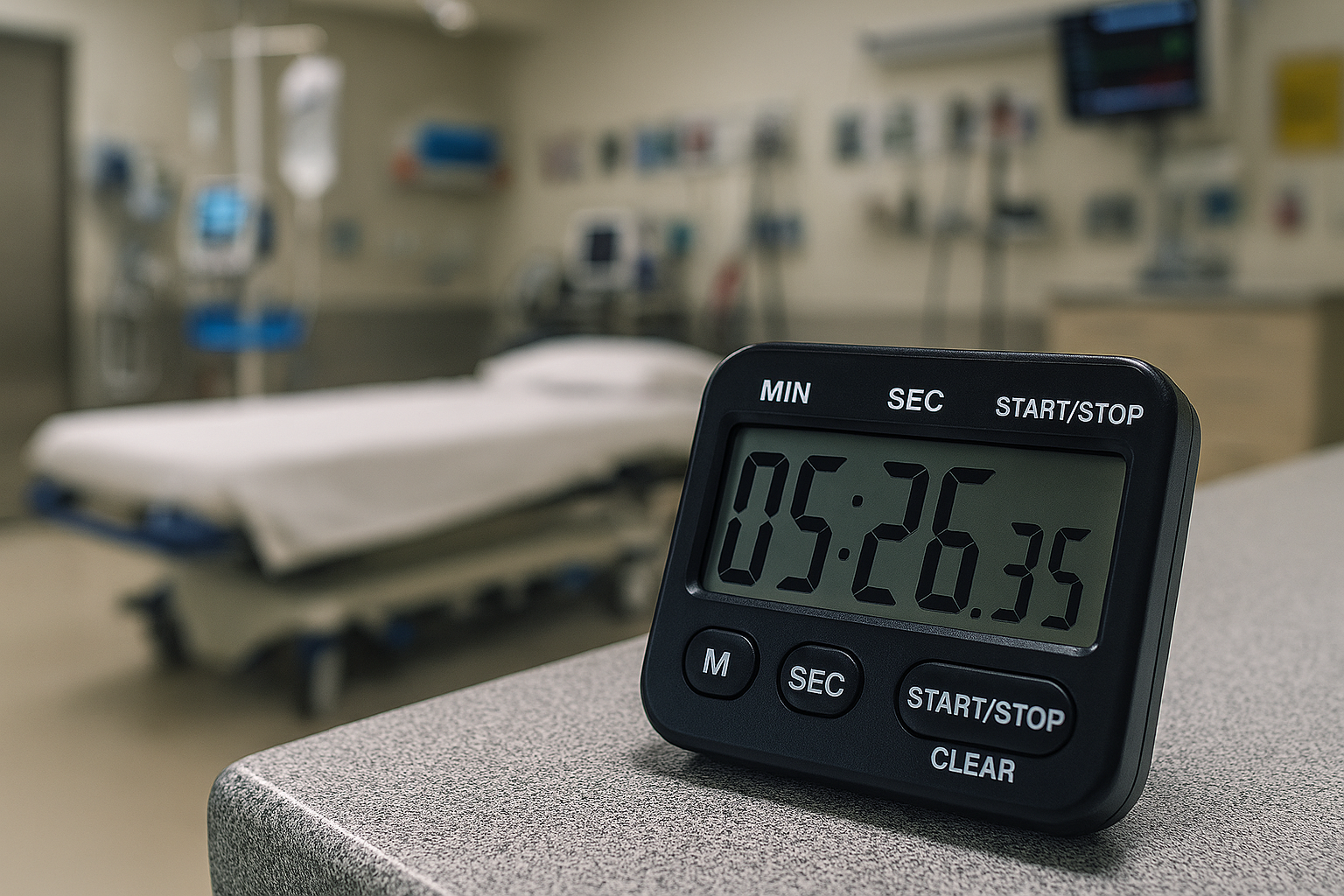
In trauma care, time is not just money—it’s mortality, morbidity, and meaningful metrics. From the moment a patient’s wheels cross the ED threshold to the minute a trauma activation is triggered and the second a life‑saving intervention is performed, timestamps narrate the entire performance of a trauma system. These seemingly small numerical markers become the backbone of Performance Improvement (PI), ensuring that trauma teams don’t just save lives—they learn from every encounter.
Arrival Time: The First Plot Twist
Patient arrival timestamps serve as the first anchoring point in the trauma timeline. They inform downstream metrics like activation timeliness, surgeon response, and time‑to‑intervention. According to trauma PI guidelines, accurate capture of arrival time is essential for primary review processes, and is a foundational element of trauma quality assessments (Froedtert & Medical College of Wisconsin, 2025).
Without a reliable arrival time, everything else becomes a temporal guessing game—and the only place guessing is acceptable in trauma is during hospital holiday parties.
Activation Time: When the Clock Hits “Action!”
The moment a trauma activation is triggered is where team dynamics, communication, and system readiness collide. Evidence shows that delays in activation—and mismatches in activation level—directly influence patient outcomes and resource utilization (Schwing et al., 2019).
In one study, streamlined EMS intake processes reduced incorrect activations from 27.3% to 10.7%, with activation times plummeting from 48.5 minutes to just 4.71 minutes (Schwing et al., 2018). That’s not just improvement—that’s a performance glow‑up worthy of a standing ovation.
Even the American College of Surgeons mandates trauma surgeon presence within 15 minutes of arrival for 80% of cases, making accurate activation times not only best practice, but a non‑negotiable standard (Schwing et al., 2019).
Intervention Times: Where PI Meets ROI (Return on Intervention)
Intervention timestamps—such as airway management, chest tube placement, transfusion start times, and emergent operative care—serve as high‑yield indicators of trauma system efficiency. Research shows that time‑sensitive, high‑intensity interventions (HITS) correlate strongly with outcomes, particularly in severely injured patients (Fakhry et al., 2023).
These timestamps reveal whether:
The right personnel were present at the right time
Resource mobilization was timely
Clinical decision‑making honored the severity of patient physiology
The trauma system functioned like a synchronized orchestra… or a garage band
When timestamps tell a story of delay or deviation, PI teams can identify gaps such as provider response times, workflow inefficiencies, or opportunities for education and protocol revision (White, 2023).
The PI Payoff: Why Timestamps Matter
Together, timestamps create a reproducible, transparent blueprint of trauma care. They allow PI teams to:
Track compliance with standards
Identify audit filters
Validate or refute issues
Drive corrective action
Ultimately reduce overtriage, undertriage, and avoidable harm
High undertriage rates—25% in younger adults and 47% in older adults—highlight how timely activations and interventions remain critical opportunities for improvement (Fakhry et al., 2023).
These numbers remind us: in trauma care, the clock is both a tool and a teacher.
Let’s Synchronize the System
Whether you are a trauma nurse, PI coordinator, ED provider, or EMS partner, your attention to accurate, real‑time documentation fuels improvement. Treat every timestamp like a vital sign—measured carefully, interpreted thoughtfully, and used proactively.
Commit today to strengthening trauma documentation practices, engaging in data‑driven PI reviews, and championing process refinement. Because when every second counts, every timestamp matters.
References
Fakhry, S. M., Shen, Y., Wilson, N. Y., & Orlando, A. (2023). Multicenter study of trauma activation criteria and time‑sensitive care in older versus younger adults. Trauma Surgery & Acute Care Open, 10(4), e001770. https://tsaco.bmj.com/content/10/4/e001770
Froedtert & Medical College of Wisconsin. (2025). Trauma performance improvement and patient safety indicators. https://www.froedtert.com/sites/default/files/upload/docs/services/trauma/guidelines/trauma-performance-improvement-patient-safety-indicators.pdf
Schwing, L., Faulkner, T., Bucaro, P., Herzing, K., Meagher, D. P., & Pence, J. C. (2019). Trauma team activation: Accuracy of triage when minutes count. Journal of Trauma Nursing, 26(4), 208–214. https://doi.org/10.1097/JTN.0000000000000450
Schwing, L. G., & Faulkner, T. D. (2018). Trauma team activation: Accuracy of triage when minutes count. Pediatric Trauma Society 2018 Abstracts. https://pediatrictraumasociety.org/meeting/abstracts/2018/58.cgi
White, C. (2023). Trauma performance improvement: Tools and tips [PowerPoint slides]. Trauma Program Managers of California. https://www.traumamanagersca.org/docs/Trauma_Performance_Improvement.White.pdf
