
Imaging Stewardship in Trauma: Seeing the Big Picture Without Overexposing It
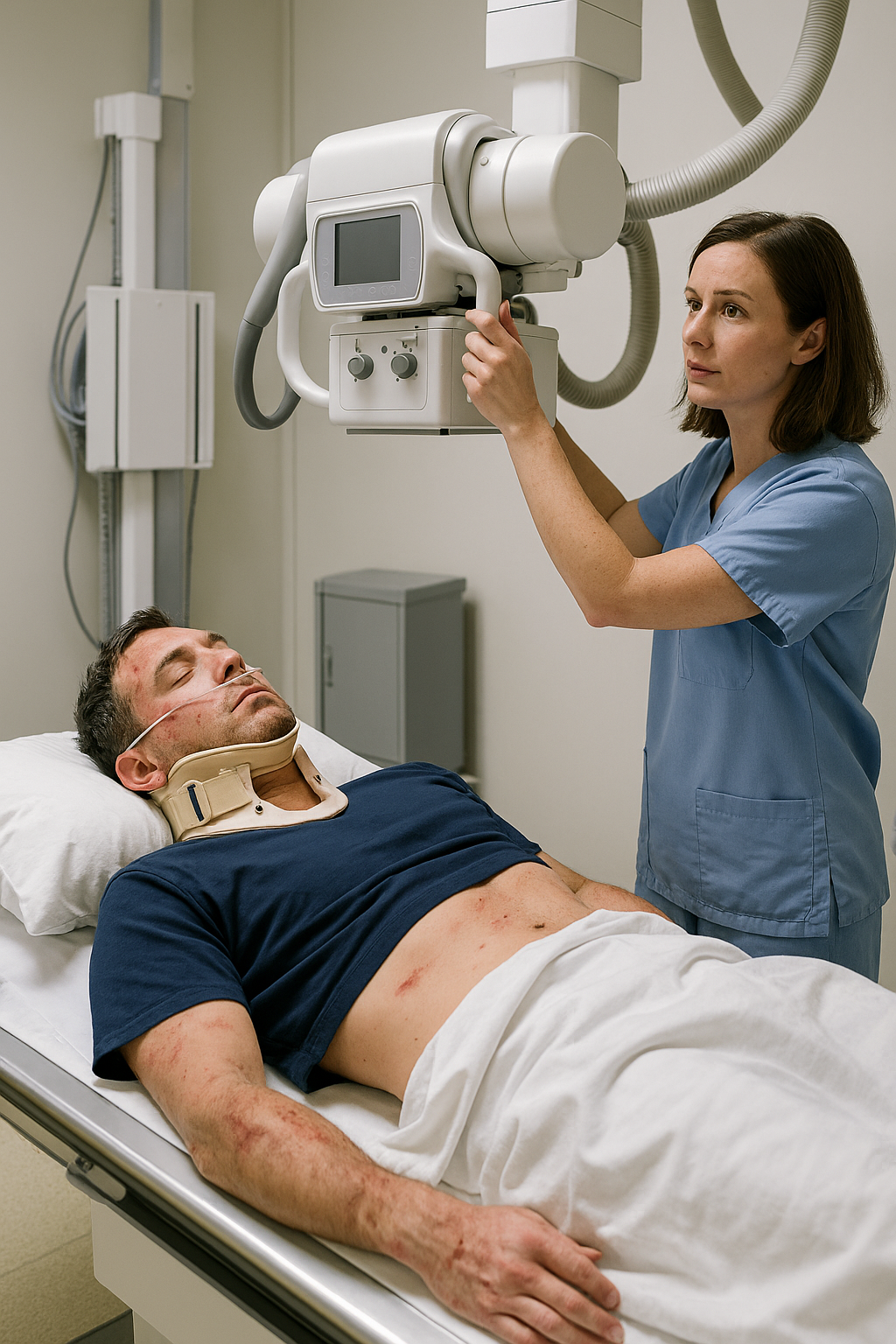
Imaging in trauma care is a bit like ordering from a very expensive menu—you want exactly what you need, nothing more, nothing less, and ideally without irradiating your patient into next week. As trauma systems evolve and imaging technology becomes faster and sharper, the challenge isn’t just can we scan—but should we? That’s where imaging stewardship steps in: a thoughtful, evidence‑driven approach to ensure that trauma imaging remains high‑value, targeted, and safe.
The Stakes: Trauma Imaging in a High‑Velocity World
Trauma care moves fast—sometimes faster than the human body or the radiology reading room can reasonably keep up with. Computed tomography (CT), in particular, has become the linchpin of trauma assessment thanks to its speed, diagnostic breadth, and ability to detect life‑threatening injuries across multiple body regions in minutes (Jacovides et al., 2024).
But with great power comes great responsibility. As CT utilization climbs, so too do radiation exposure, contrast risks, downstream incidental findings, and the occasional “full‑body scan for a stubbed toe” scenario. National guidelines have long emphasized the necessity of appropriateness in ordering advanced imaging, pushing clinicians to balance rapid evaluation with judicious decision‑making (American College of Radiology, 2024, Stempniak, 2024).
What Is Imaging Stewardship?
Imaging stewardship is essentially the art and science of ordering the right imaging at the right time for the right patient—for the right reason. In trauma settings, this becomes particularly important when adrenaline, unclear mechanisms, and multiple competing priorities collide.
Major trauma guidelines stress that imaging decisions should be made by senior clinicians who can account for both diagnostic yield and potential harms while integrating clinical examination, mechanism of injury, and institutional resources (South West London Trauma Network, 2024).
Similarly, the American College of Surgeons' Trauma Quality Improvement Program (TQIP) provides detailed best practices across brain, spine, chest, abdominal, and vascular imaging to guide the rational deployment of CT in trauma scenarios (ACS, 2018).
Why It Matters: A Radiologic Goldilocks Principle
1. Avoiding Over‑Imaging
Whole‑body CT (WBCT) has high diagnostic value in major polytrauma but is not recommended as a blanket protocol for all comers. Guidelines such as NICE and North American trauma networks caution against routine WBCT without clear clinical suspicion (South West London Trauma Network, 2024).
2. Avoiding Under‑Imaging
Conversely, failure to scan when indicated can be dangerous. ACR’s Appropriateness Criteria and updates—including clinical guidance for penetrating torso trauma—help physicians select the most effective imaging modality in time‑critical scenarios (Stempniak, 2024).
3. Improving Workflow & Speed
Trauma imaging guidelines emphasize rapid acquisition and timely interpretation—often within minutes—to support decision‑making in critical windows (Froedtert & MCW, 2025).
Technology’s Temptation: Just Because We Can…
Modern scanners are fast. Ridiculously fast. They slice thinner than deli meat and reconstruct images faster than clinicians can order them. But this technological horsepower risks encouraging “scan first, think later” habits.
Experts highlight CT’s evolving role in trauma—how its availability and speed can both improve outcomes and introduce dilemmas around overuse, incidental findings, and cost (Jacovides et al., 2024).
The Path Forward: Creating a Culture of Stewardship
1. Embrace Decision Support Tools
The ACR Appropriateness Criteria remains the gold standard for selecting appropriate imaging and is updated regularly to reflect new evidence (American College of Radiology, 2024).
2. Empower Senior Clinicians to Guide Imaging Decisions
Trauma imaging should be directed by clinicians trained in trauma management who can recognize when scanning is essential—and when it’s excessive (South West London Trauma Network, 2024).
3. Integrate Trauma‑Specific Workflows
Organizations like Froedtert & Medical College of Wisconsin (MCW) emphasize 24/7 imaging availability, rapid acquisition windows, and timely radiology interpretation, all reinforcing stewardship through infrastructure (Froedtert & MCW, 2025).
4. Monitor and Improve
TQIP emphasizes performance improvement initiatives, enabling trauma centers to continually refine imaging use patterns (ACS, 2018).
Conclusion: Stewardship Is a Team Sport
Imaging stewardship in trauma isn’t about limiting care—it’s about optimizing it. When clinicians combine evidence‑based guidelines, clinical expertise, and operational efficiency, patient outcomes improve, radiation exposure decreases, and trauma systems function more smoothly.
“Scan Smart, Save Lives.”
Whether you’re a trauma surgeon, ED provider, radiologist, or performance improvement leader, you play a pivotal role in promoting imaging stewardship.
Adopt and use evidence‑based imaging guidelines.
Educate team members on when imaging is and isn’t indicated.
Collaborate across disciplines to refine trauma imaging pathways.
Audit imaging utilization and share results transparently.
The future of trauma imaging is not just faster—it’s smarter. And stewardship is how we get there.
References
American College of Radiology. (2024a). ACR Appropriateness Criteria®. https://www.acr.org/Clinical-Resources/Clinical-Tools-and-Reference/Appropriateness-Criteria
American College of Surgeons. (2018). ACS TQIP best practices guidelines in imaging. https://www.facs.org/media/oxdjw5zj/imaging_guidelines.pdf [facs.org]
Froedtert & Medical College of Wisconsin. (2025). Trauma imaging services guideline. https://www.froedtert.com/sites/default/files/upload/docs/services/trauma/guidelines/trauma-imaging-guidelines.pdf
Jacovides, C. L., Udeh, N. D., Cannon, J. W., Knollmann, F. (2024). The evolving role of computed tomography (CT) in trauma care. In: Knollmann, F. (eds) Trauma Computed Tomography. Springer. https://doi.org/10.1007/978-3-031-45746-3_1
South West London Trauma Network. (2024). Major trauma imaging guideline. https://swlstrauma.net/documents/trauma-imaging.pdf
Stempniak, M. (2024). American College of Radiology adds 6 new topics to its influential imaging appropriateness criteria. Radiology Business. https://radiologybusiness.com/topics/healthcare-management/healthcare-quality/american-college-radiology-adds-6-new-topics-its-influential-imaging-appropriateness-criteria
