
Disability Assessment in Trauma: AVPU vs GCS – Can We Please Pick a Lane?
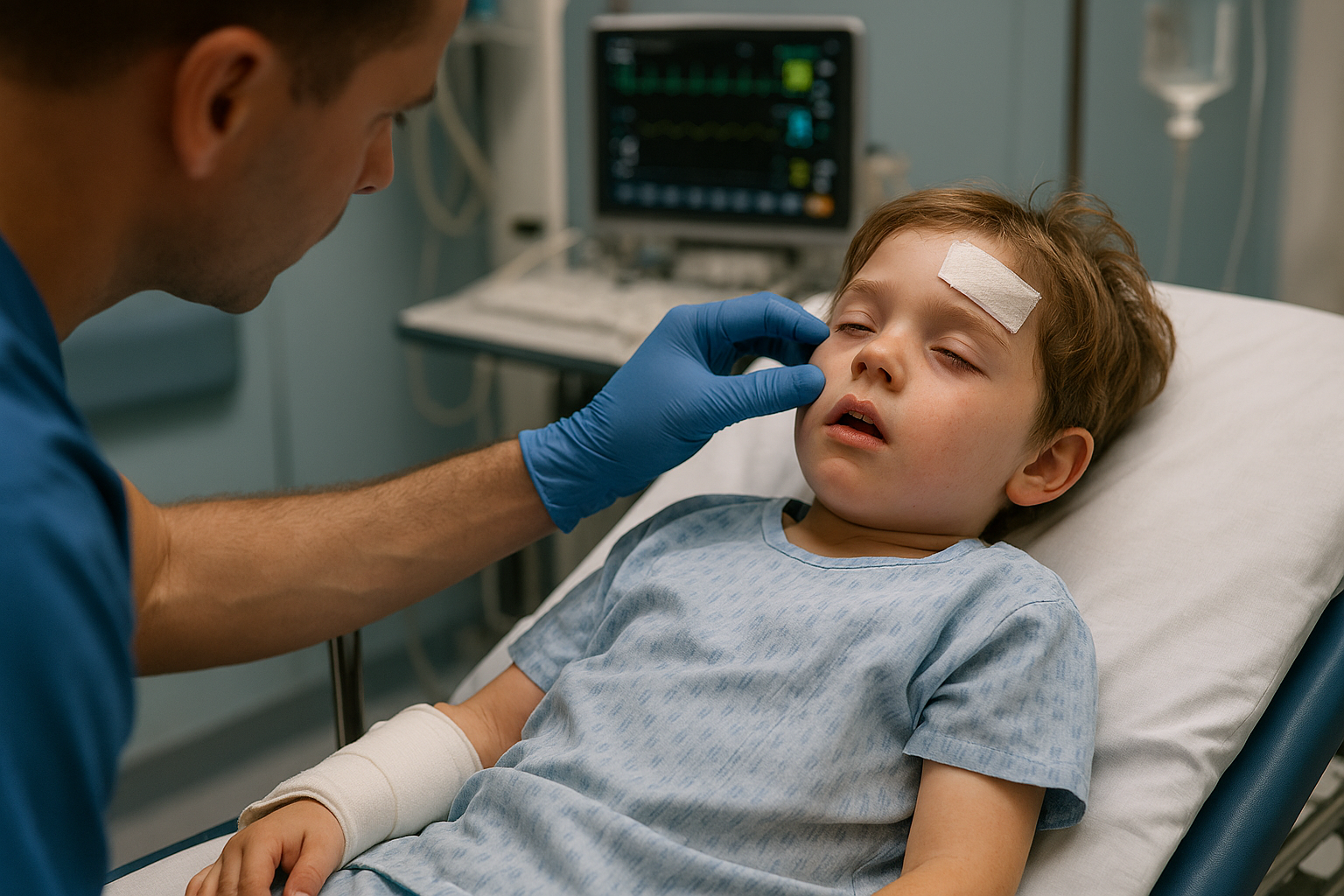
When it comes to trauma care, speed and accuracy are everything. Yet, in the whirlwind of resuscitation, clinicians often find themselves toggling between two neurological assessment tools: AVPU (Alert, Verbal, Pain, Unresponsive) and the Glasgow Coma Scale (GCS). Both aim to answer the same question—how awake is this patient?—but their coexistence can lead to inconsistency, confusion, and even documentation errors. So, which should we use, and why does consistency matter?
AVPU: The Speed Demon
AVPU is the trauma team’s quick-and-dirty tool. It’s simple, memorable, and fast—perfect for the chaos of the emergency department. A patient is either Alert, responds to Verbal stimuli, responds to Pain, or is Unresponsive. That’s it. No math, no scoring, no debate. AVPU shines during the primary survey, where seconds count (American College of Surgeons, 2022).
GCS: The Gold Standard
Enter the Glasgow Coma Scale, the more sophisticated cousin. GCS breaks consciousness into three components: Eye Opening, Verbal Response, and Motor Response, yielding a score from 3 to 15. It’s detailed, reproducible, and widely accepted for prognostication and research (Teasdale et al., 2014). But let’s be honest—calculating GCS in a noisy trauma bay while someone is intubating the patient? Not ideal.
The Consistency Conundrum
Here’s the rub: AVPU and GCS are not interchangeable. While AVPU roughly correlates with GCS ranges (e.g., Alert ≈ GCS 15), the lack of granularity in AVPU can mask subtle changes in neurological status (Gill et al., 2019). Conversely, insisting on GCS during the initial chaos can delay documentation and distract from life-saving interventions. Inconsistent use between providers or across shifts can lead to charting discrepancies, impacting handoffs and quality metrics.
Best Practice: Harmonize, Don’t Hybridize
The solution? Consistency with context. Use AVPU for the primary survey—fast, focused, and functional. Transition to GCS during the secondary survey and ongoing monitoring, where precision matters. And here’s the kicker: a full GCS should be performed within the first 30 minutes of the patient’s arrival, regardless of age. This applies to both pediatric and adult trauma patients, ensuring accurate baseline documentation and facilitating trend monitoring for deterioration or improvement.
Call to Action
If you’re a trauma leader, educator, or bedside clinician, champion clarity over chaos. Audit your protocols. Train your teams. Make it explicit: AVPU for rapid assessment, GCS for detailed evaluation within 30 minutes. Consistency isn’t just a buzzword—it’s a patient safety imperative.
References
American College of Surgeons. (2022). Advanced Trauma Life Support (ATLS®): Student Course Manual. Chicago, IL: American College of Surgeons. https://www.facs.org/quality-programs/trauma/education/atls/
Gill, M., Steele, R., Windemuth, R., Green, S. M. (2019). Relationship of the AVPU scale to the Glasgow Coma Scale in head-injured patients. Prehospital Emergency Care, 13(1), 14–18. https://doi.org/10.1080/10903120802471917
Teasdale, G., Maas, A., Lecky, F., Manley, G., Stocchetti, N., & Murray, G. (2014). The Glasgow Coma Scale at 40 years: Standing the test of time. The Lancet Neurology, 13(8), 844–854. https://doi.org/10.1016/S1474-4422(14)70120-6
