
Trauma Bay Exposure and Hypothermia: A Critical Driver of the Diamond of Death
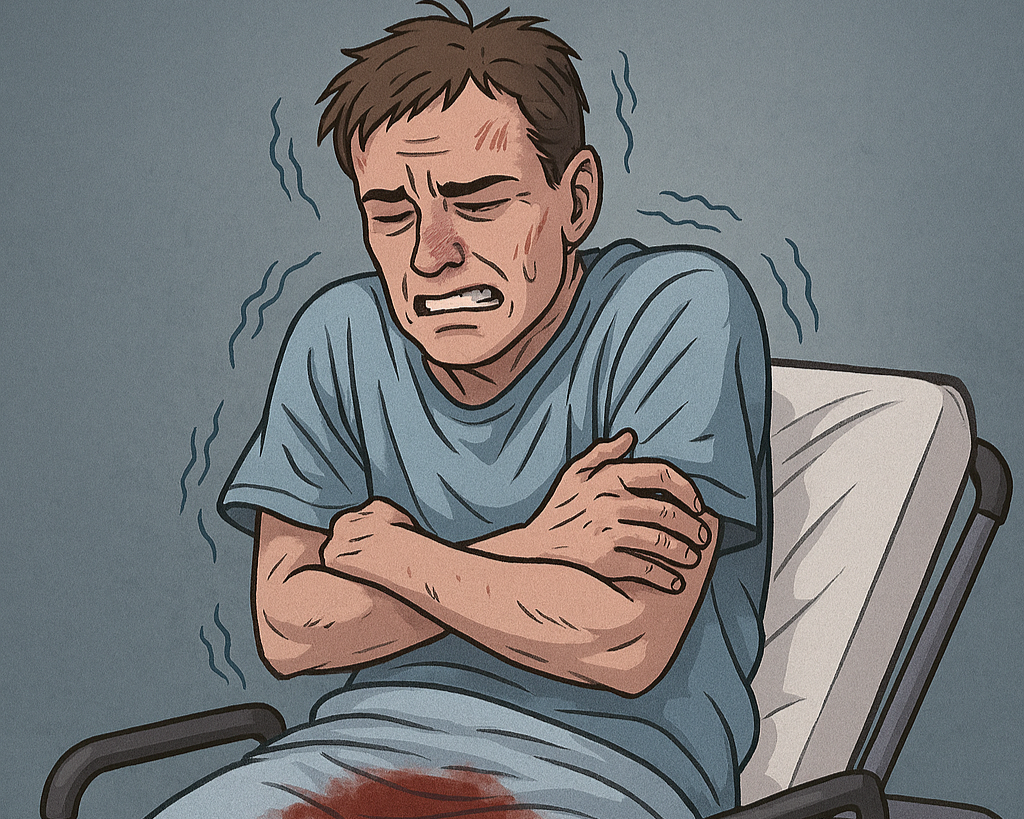
Hypothermia is one of the most dangerous complications in trauma care, and importantly, it does not only occur in the prehospital environment. Even inside the trauma bay, exposure required for rapid assessment and lifesaving interventions frequently triggers unintended heat loss. This internal, iatrogenic exposure can quickly push trauma patients into hypothermia, accelerating their progression into the Diamond of Death—hypothermia, acidosis, coagulopathy, and hypocalcemia (Trauma Nursing, 2024).
As clinicians focus on hemorrhage control, airway stabilization, and rapid diagnostics, thermal protection is often unintentionally overlooked. Yet the trauma bay—with its cold environment, wet surfaces, metal stretchers, continuous exposure for primary/secondary surveys, and unwarmed interventions—is a high‑risk setting for heat loss.
Why Trauma Bay Exposure Causes Hypothermia
Even brief periods of full-body exposure during resuscitation can significantly drop core temperature. Patients arrive physiologically vulnerable: vasodilated from shock, immobilized, and frequently wet from blood or prehospital treatments. Trauma studies show hypothermia can be present in up to 44% of trauma patients at hospital arrival (Jalali, Norouzadeh, & Dinmohammadi, 2023), and trauma bay practices can worsen this immediately.
Common trauma bay-related contributors include:
Clothing removal for rapid assessment
Cold ambient room temperatures
Direct contact with cold surfaces (stretcher, CT table)
Administration of unwarmed IV fluids or blood
Use of ultrasound gel, irrigation fluids, and antiseptics at room temperature
Prolonged procedural exposure (chest tubes, wound exploration, hemorrhage control)
These factors collectively cause rapid conductive, evaporative, and convective heat loss.
Once hypothermia begins, it becomes a driving force within the Diamond of Death (Kumar, 2018).
Hypothermia as a Central Accelerator of the Diamond of Death
1. Hypothermia
Trauma bay exposure-induced hypothermia diminishes enzymatic activity required for coagulation, slows cardiac function, promotes dysrhythmias, and drastically worsens clinical outcomes (Miles, 2024). Even mild cooling disrupts platelet aggregation and impairs clotting factor activation.
2. Acidosis
Hypothermia reduces oxygen delivery and impairs tissue perfusion, accelerating anaerobic metabolism and lactic acidosis. Acidosis, in turn, suppresses thrombin production and further weakens hemostasis (Trauma Nursing, 2024).
3. Coagulopathy
Cold temperatures impair platelet function, slow enzyme reactions, and reduce circulating clotting factor effectiveness. Trauma patients exposed in the bay can rapidly shift from compensated to decompensated hemorrhage because coagulopathy worsens exponentially as temperature drops (Trauma Nursing, 2024).
4. Hypocalcemia
Hypocalcemia—present in more than half of severely injured trauma patients—worsens with transfusion, as citrate in blood products binds calcium. Hypothermia amplifies the cardiovascular depression caused by hypocalcemia, worsening hypotension and impairing cardiac contractility (DrOracle, 2025; Vasudeva, 2021).
Thus, hypothermia induced by trauma bay exposure is not a single issue—it's a multiplier of all diamond components.
Clinical Consequences Inside the Trauma Bay
Research shows hypothermic trauma patients:
Have higher transfusion rates (Jivraj et al., 2020)
Progress more rapidly to acidosis and coagulopathy
Face increased hemodynamic instability
Experience greater mortality and organ failure
The trauma bay, therefore, becomes a critical point of intervention—where early temperature management can prevent entry into the Diamond of Death.
Breaking the Diamond: Trauma Bay Strategies to Prevent Hypothermia
Effective prevention requires a culture shift: maintaining normothermia must become as essential as airway control or hemorrhage management.
Essential Interventions
Warm the room: maintain trauma bay temperatures ≥ 26°C whenever feasible.
Use active warming devices immediately upon arrival.
Minimize unnecessary exposure after the primary survey.
Dry and cover the patient continuously, leaving only procedural areas exposed.
Warm ALL fluids and blood products (Miles, 2024).
Use warmed ultrasound gel, irrigation fluids, and skin prep solutions.
Place insulating layers beneath the patient to prevent conductive heat loss.
Monitor temperature as a vital sign—early and frequently.
The trauma team must view thermal protection as a resuscitation priority, not an afterthought.
Conclusion
In the trauma bay, exposure is unavoidable—but hypothermia is not.
Every second a patient lies uncovered or receives unwarmed interventions, they move closer to the Diamond of Death.
Trauma clinicians must:
Treat temperature preservation as a core resuscitation task.
Incorporate hypocalcemia monitoring into early protocols.
Educate staff on how trauma bay exposure drives the Diamond of Death.
Standardize warming procedures across the trauma system.
Preventing hypothermia in the trauma bay is one of the fastest and most effective ways to stop the Diamond of Death in its tracks—and save lives.
References
DrOracle. (2025). What is the diamond of death in trauma patients? https://www.droracle.ai/articles/289218/what-is-the-diamond-of-death-in-trauma-patients
Jalali, A., Norouzadeh, R., & Dinmohammadi, M. (2023). Accidental hypothermia and related risk factors among trauma patients in prehospital settings. Disaster and Emergency Medicine Journal, 8(1), 21–26. https://doi.org/10.5603/DEMJ.a2022.0041
Jivraj, N. K., Kaustov, L., Hao, K. N., Strauss, R., Callum, J., Tien, H., & Alam, A. Q. (2020). Pre-hospital hypothermia is associated with transfusion risk after traumatic injury. Canadian Journal of Emergency Medicine, 22(S2) S12-S20. https://doi.org/10.1017/cem.2019.412
Kumar, R. (2018). The lethal diamond in trauma. RK.MD. https://rk.md/2018/lethal-triad-trauma/
Miles, E. (2024). Lethal diamond. North American Rescue. https://www.narescue.com/nar-blog/lethal-diamond.html
Trauma Nursing. (2024). 4 facts about the lethal trauma diamond that nurses should know. Trauma System News.
https://trauma-news.com/2024/05/4-facts-about-the-lethal-trauma-diamond-that-nurses-should-know/
Vasudeva, M., Mathew, J. K.; Groombridge, C., Tee, J. W., Johnny, C. S., Maini, A., Fitzgerald, M. C. (2021). Hypocalcemia in trauma patients: A systematic review. Journal of Trauma and Acute Care Surgery ,90(2):p 396-402. https://doi.org/10.1097/TA.0000000000003027
